
Tour review · TOUR REVIEWS
Private Skip The Line Archeo Tour Of Pompeii
Pompeii is frozen motion, and this tour helps you read it fast. I love how a private guide keeps the pace sensible and points out details most people miss, and I also love the focus on big landmarks like the Forum so you leave with a clear sense of how the city worked. One consideration: it is only about 2 hours, so you will not get the kind of slow, pick-anywhere wandering you might want if you plan to linger.
You start at Piazza Esedra and head straight into Pompeii’s UNESCO setting, built more than 2,500 years ago and famously destroyed by Vesuvius in 79 AD. With a mobile ticket and a small, private format, you spend your limited time on the places that explain the story, not on guessing where to go next.
Key points before you go
- Private, small-group feel for a more personal Pompeii visit
- Skip-the-line style entry helps you make the most of a short 2-hour window
- Top sights in one route, including baths, villas, theatres, and the Temple of Apollo
- Forum and main square time so you understand daily civic life
- Guides like Viktoria or Victoria are praised for high energy, humor, and checking your pace
Pompeii in 2 hours, with a guide who keeps you moving
Pompeii can feel like a giant outdoor museum. That sounds romantic, until you lose time walking in circles, trying to match signs to what you want to see. This private format is designed for the people who want the good stuff in a reasonable chunk of time, without turning the day into a logistics puzzle.
The best part is the rhythm. You meet your guide and then you are guided through the key sectors of the city, with an emphasis on what those places meant to Romans. Instead of collecting random sights, you get a tour that builds a mental map: streets, homes, public buildings, entertainment, and everyday services.
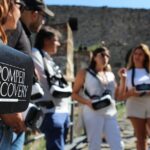
If you enjoy questions, this style works well. In particular, guides such as Viktoria or Victoria are described as the kind of person who keeps people engaged, asks questions, and uses humor to make the scene feel real rather than academic. That matters in Pompeii, because it is not just the ruins. It is the jobs, routines, and social habits behind them.
The only real trade-off is time. Two hours is enough to hit the highlights, but not enough to see Pompeii at a slow, photo-heavy pace. If you know you want to spend a long time photographing a single area, you may feel rushed. For most first-timers, though, it is a smart way to get the big picture.
You can also read our reviews of more private tours in Pompeii

Meeting at Piazza Esedra and getting into the park smoothly
You start at Piazza Esedra, 80045 Pompei NA, Italy, and the tour ends back at the meeting point. That matters more than it sounds. Pompeii is spread out. If you start from the wrong side, you waste energy just crossing between zones.
This tour is also set up with a mobile ticket, which is handy once you are on the ground. You avoid last-minute ticket hunts and can focus on getting started.
The title includes skip-the-line, and at Pompeii that is not a small benefit. When entry lines stack up, even a short tour gets longer in ways you do not want. The goal here is simple: get you inside with enough time to actually see key areas, not just stand and wait.
Walking Pompeii’s ancient streets, and learning what you are actually looking at
Once you are inside the Archaeological Park, the tour frames Pompeii as a real city, not only a disaster site. You begin with the ancient streets and then build outward from there. That flow is practical: streets are the backbone. When you understand how they connected buildings, you stop feeling lost among ruins.
As you walk, your guide connects architectural pieces to daily life. That is what makes a highlight tour worth paying for. In Pompeii, the difference between an okay visit and a memorable one is usually interpretation.
You can expect stops that cover:
- The theatres and entertainment areas
- Gladiator barracks
- Houses and places where people ate and shopped
- Roman bath spaces
- Temples, basilica, and a main square that functions like a civic heart
Even if you have seen photos online, the tour helps you connect what you see on the ground to what it would have meant. It is the difference between looking at stone and understanding where the noise would have been, where people would have gathered, and how movement through the city shaped everyday life.
Baths and villas, where Roman comfort shows up in the details
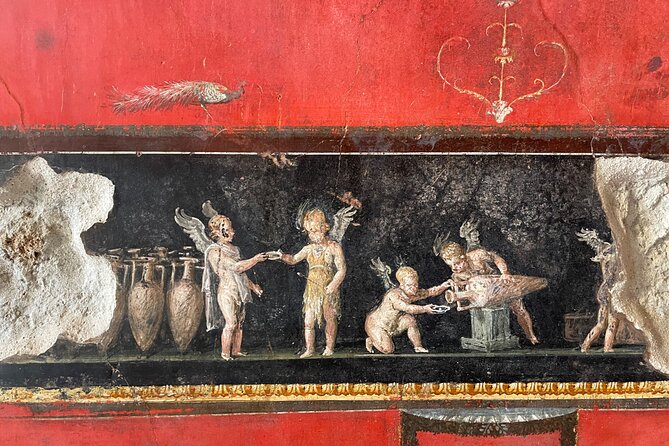
The bathhouses and villas are some of the most revealing ruins in Pompeii, because they show how Romans handled comfort, status, and routine. The tour includes time at the Roman baths and villas, which gives you more than one angle on how people lived.
Here is why I like this stop order. Many first-time visits jump straight to the flashy big buildings. Baths are often the opposite. They are social. They are practical. They tell you what people did when they were not at work or at a show.
When you move through bath areas with a guide, you get a better sense of spaces that served different purposes. You also tend to notice more than you would alone, because a good guide points out the design logic that would otherwise look like random fragments.
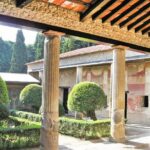
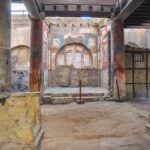
Villas and residential areas add another layer. You begin to see the “day-to-day Pompeii” side, including how a home could communicate wealth and taste. It is also a good place to think about why certain rooms were arranged the way they were, since Pompeii is unusually good at preserving layout.
Temple of Apollo and the religious side of city life
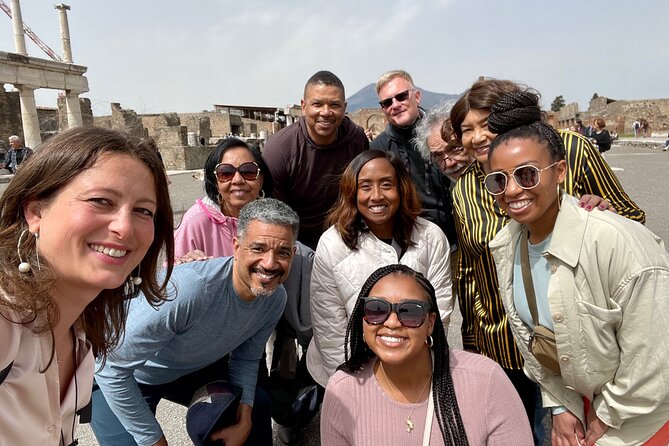
Pompeii was not just streets and entertainment. It had a spiritual map too, and the tour includes the Temple of Apollo and other religious spaces.
Religion is tricky in ruins. Without help, it can feel like you are standing in front of old stones with no clear link to living belief. The Temple of Apollo stop helps bridge that gap by placing worship into a bigger civic routine.
This is where your guide’s pacing really matters. You get just enough time to understand the role of temples and how they fit into the city’s calendar of public life. You are not stuck there for hours, but you also do not sprint past it without context.
If you are the type who likes “why did people do this?” questions, this part usually lands well. It is not about learning a list of facts. It is about connecting structures to behavior.
More Naples tours, ruins, coast days, and city experiences to compare



Theatres and gladiator barracks, Roman spectacle made physical
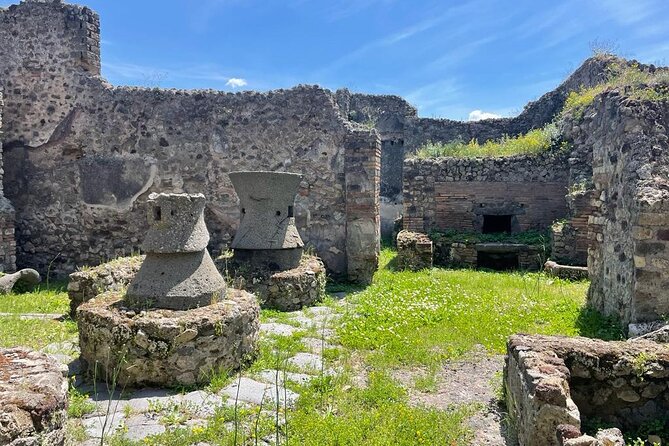
Entertainment is one of the best ways to understand a culture quickly, and this tour includes theatres and gladiator barracks.
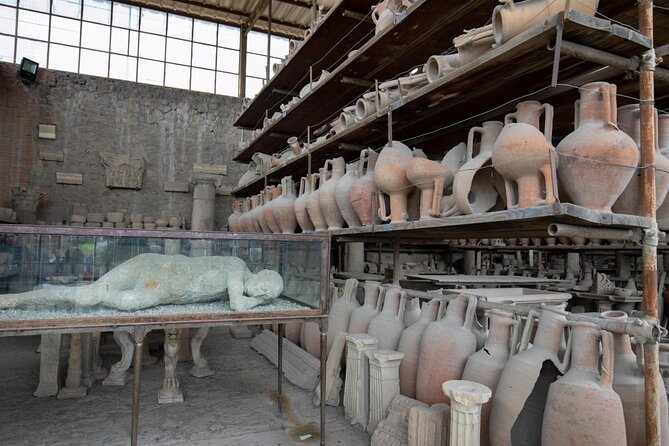
The theatre side helps you see where the crowd gathered and what the city valued in public leisure. The gladiator areas shift the focus to the people who trained and prepared for spectacle. That combination is powerful because it links the “watching” with the “making.”
Even within a short tour, this is a section where a good guide can unlock a lot. The most useful moments are usually when your guide points out how training, crowd energy, and city life connected. You start seeing Pompeii as a living machine: entertainment is not separate from daily life. It is part of it.
If you have ever wished you could understand what a ruin was like during the busiest days, this is the part that most often satisfies that itch.
The Forum and the big civic heart of Pompeii
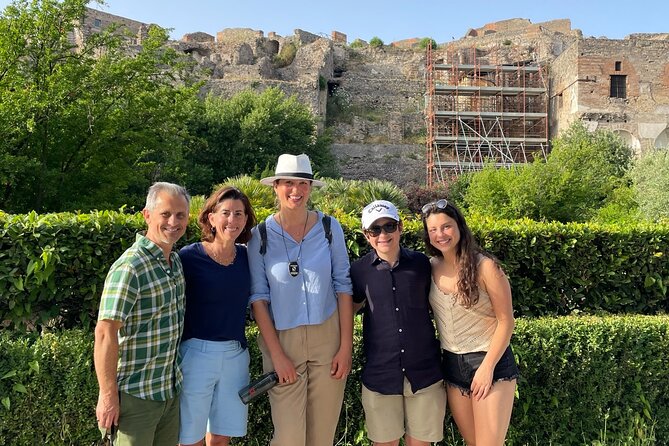
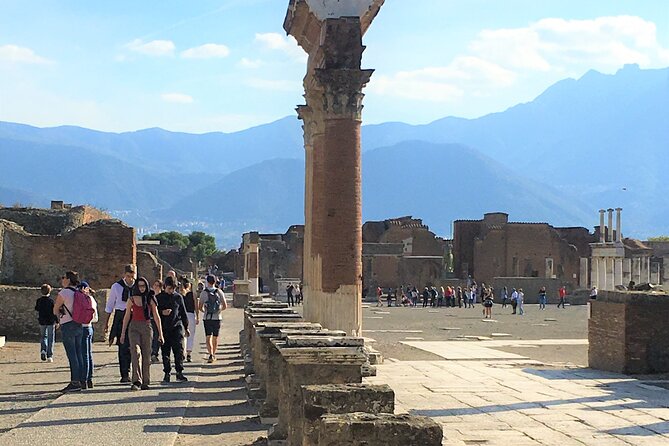
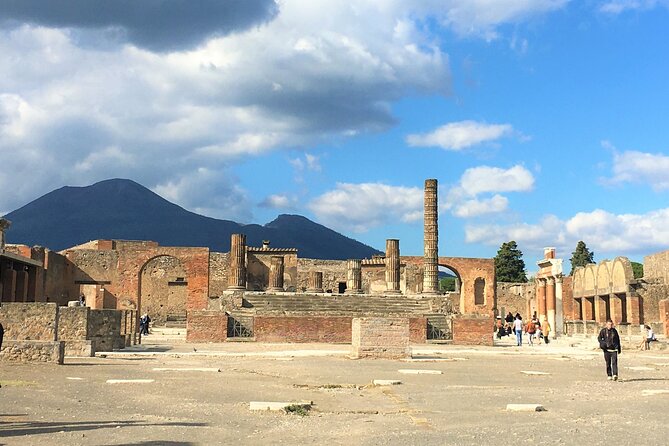
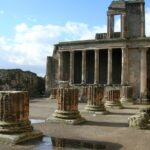
The Forum is a major highlight for a reason. It is the city’s main square, the place where public business and daily civic life made themselves visible.
This is also one of the easiest areas for a first-timer to understand, because it is more about function than mystery. You can usually follow the logic of gathering points: where people would have met, where announcements and public activity would have happened, and how the Forum anchored the city’s social rhythm.
On a private tour, you typically get better time here than you would on an unguided walk. You stop long enough to notice structure and layout, and your guide gives you the “so that is what this area was for” explanation.
I also like that the tour balances big public spaces with everyday spots like restaurants and shops. That keeps the Forum from feeling like an abstract political concept. Instead, it becomes a practical place within a real routine.
Value and price: what $240.28 really buys you
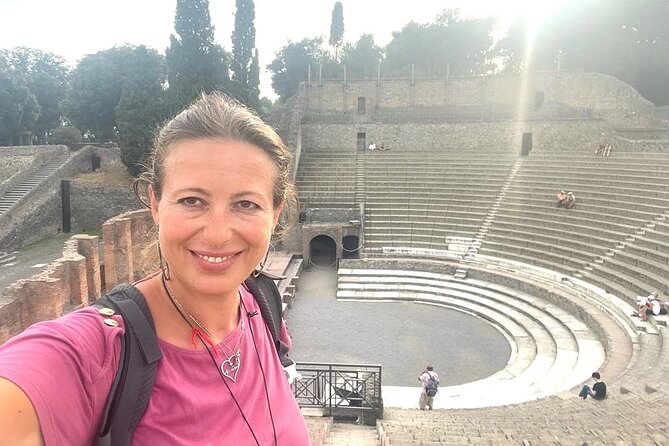
The price is $240.28 per group (up to 10) for about 2 hours, and you get a private guide for that time. The math is simple: the more people you bring, the more this resembles a shared cost rather than a premium, single-person splurge.
Is it worth it? In my view, it is a strong value if you want:
- A clear route through key sites
- Less wandering and more interpretation
- A guide who can adjust pace to your group
Where it might not feel like a bargain is if you are traveling solo and you would happily spend half a day on your own. If you are the kind of person who loves to roam with a map and figure things out slowly, you may prefer a cheaper independent strategy.
One more practical note: the tour description mentions admission details, and at the same time it lists entrance fees as not included. Since those two notes can be confusing, you should confirm what you are expected to pay for entry when you book. The point is to avoid an unpleasant surprise when you arrive.
How far in advance you’ll want to plan
This experience is typically booked about 58 days in advance on average. That suggests two things. First, it is popular. Second, Pompeii days fill up, especially when people want a guided slot that fits into a tight schedule.
If your travel dates are fixed, book early. If your dates are flexible, you still should not leave it until the last minute, because a private guide slot depends on guide availability.
Who this Pompeii private tour suits best
This tour is best for people who want the highlights with context, without turning Pompeii into a full-day project. You will probably enjoy it most if:
- You are visiting Pompeii for the first time
- You want to understand daily life, not only disaster trivia
- You prefer a controlled pace over solo navigation
- You like an interactive guide, including questions and conversation
It can also be a good fit for groups up to 10, since the pricing is per group. If you are traveling with family members who have different interests, a guide can often steer the pace so everyone stays engaged.
As for who might feel less happy: anyone who wants to linger for hours in one section and reads ruins like a novel. Pompeii is big. This tour is intentionally focused.
A realistic tip for getting the most from your 2-hour stop
If you only remember one strategy, make it this: arrive ready to listen, not just look. Wear comfortable walking shoes, bring water if you need it, and be ready to ask simple questions. Your time is short, so the guide’s interpretation is what turns the visit into something memorable.
Also, pay attention to the pacing check. Some guides like Viktoria are noted for asking whether the group’s pace and content are working. If you feel like you want more time somewhere, speak up early. A private format is most valuable when you use it.
Should you book the Private Skip-the-Line Pompeii tour?
Book it if you want a focused, high-impact Pompeii experience with a guide who can explain what you are seeing and keep the group moving in a sensible loop. The combination of major sites like baths, villas, the Temple of Apollo, and the Forum makes it ideal for first-timers who want the big picture in about 2 hours.
Skip it or consider something longer if you are a slow explorer who loves deep wandering, or if you want to do Pompeii at your own pace without paying for interpretation. Also, confirm the entry-fee situation when you book, since the notes you might see can be inconsistent.
FAQ
How long is the Private Skip The Line Archeo Tour Of Pompeii?
The tour lasts about 2 hours.
Where does the tour start and end?
It starts at Piazza Esedra, 80045 Pompei NA, Italy, and ends back at the same meeting point.
Is this a private tour?
Yes. It is a private tour/activity, and only your group participates.
What language is the tour offered in?
The tour is offered in English.
Do I get a mobile ticket?
Yes, the tour includes a mobile ticket.
Are entrance fees included?
Entrance fees are listed as not included, so you should confirm entry costs when booking. Some notes also mention admission ticket free, which can be confusing, so checking directly is smart.
Can I cancel for a full refund?
You can cancel up to 24 hours in advance of the experience for a full refund.
More Private Tours in Pompeii


More Tours in Pompeii


More Tour Reviews in Pompeii

Not for you? Here's more nearby things to do in Pompeii we have reviewed





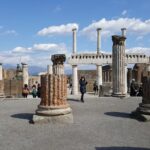
Tour Reviews, compared.
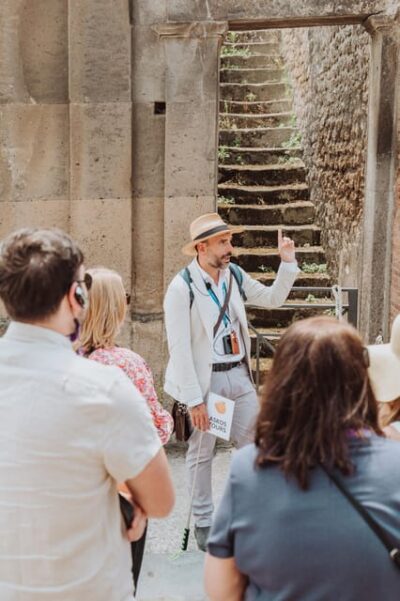 ★ 4.8Pompeii: Entry Ticket and Guided Tour with an ArchaeologistFrom $3519,459 reviews
 ★ 4.2Pompeii: Entry Ticket with Optional Audio GuideFrom $2612,360 reviews
 ★ 4.8Pompeii: Small Group Tour with an ArchaeologistFrom $4012,264 reviews
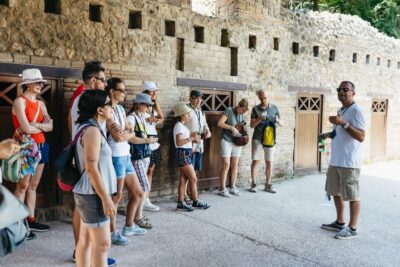 ★ 4.3Pompeii Ruins & Mount Vesuvius Day TourFrom $12011,459 reviews
 ★ 4.6Sorrento, Positano and Amalfi Full-Day TourFrom $10710,988 reviews
 ★ 5.0Sorrento, Positano & Amalfi Coast – Small Group TourFrom $768,643 reviews
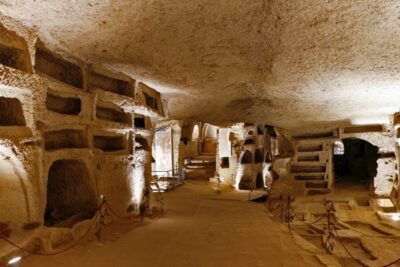 ★ 4.6Catacombs of San Gennaro Entry Ticket & Guided TourFrom $157,941 reviews
★ 5.0Pompeii Small Group Tour with an ArchaeologistFrom $356,593 reviews
★ 4.6Catacombs of San Gennaro Entry Ticket & Guided TourFrom $157,941 reviews
★ 5.0Pompeii Small Group Tour with an ArchaeologistFrom $356,593 reviews
Browse the lists this tour appears in