
Tour review · TOUR REVIEWS
Pasta Cooking class in Pompeii
A family-style pasta lesson beats the usual tour day
This Pompeii pasta cooking class turns the city into dinner, starting in a small garden and ending around the kitchen table. I love that the host teaches the “from flour and eggs” basics, the feel of the dough, and how to roll it out, not just a quick demo. You also get a real sense of family cooking, passed down and done at a human pace.
Second, I like the small group setup, with a maximum of 10 people. That means you can ask questions while you work, whether you are learning ravioli folding or how to use a pasta machine. It also helps the experience stay relaxed and personal, not rushed.
One possible consideration: this is a hands-on cooking class, so it is not the best fit if you want a mostly sit-and-watch “tour.” Also, transfer is not included, so you’ll want a plan for getting to Via Messigno, 132.
Key highlights you should know
- Garden start at Giardini Balestrieri: you begin outside, with produce from the land, then move into the home kitchen.
- Hands-on pasta making: you learn dough feel, rolling, and using a pasta machine.
- Made-and-eaten meal: you eat what you prepare, plus bruschetta, a fresh pasta dish, and a sweet finish.
- Family vibe: the host, her family, and even a cat named Gary can show up in the warm, everyday way of real life.
- Wine with the meal: during the dinner part, wine from family connections is part of the experience.
- Small group capacity: up to 10 people makes it easier to get attention while you cook.
You can also read our reviews of more cooking classes in Pompeii
A Family Kitchen at the Edge of Pompeii
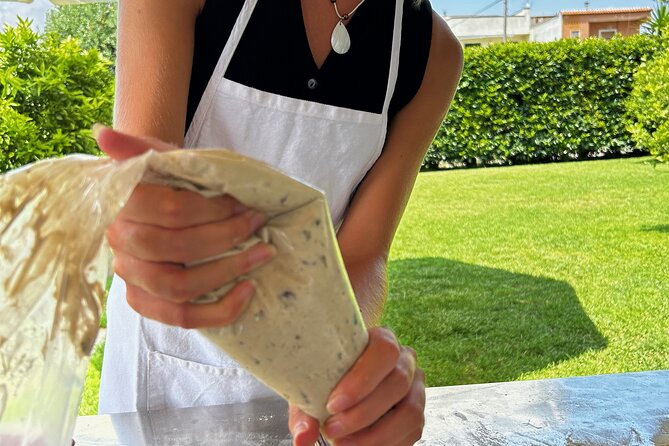
The setting is what makes this class feel different right away. You meet at Via Messigno, 132, 80045 Pompei NA, and the experience begins at the family gardens connected with Giardini Balestrieri. The idea is simple: you see the ingredients where they come from, then you cook them in the same home space where recipes get carried forward.
It is also a smart antidote to the usual Pompeii pattern of standing in crowds, taking photos, and moving on. Here, Pompeii becomes personal. You learn through your hands, smell, and taste, and the food is tied to place: seasonal vegetables, flour, eggs, and traditional techniques.
The group limit to 10 people matters more than you might think. In a larger class, the instructor spends most of the time managing pace. In a smaller one, you get steadier guidance as you mix dough, roll it thin, and learn what “right” looks and feels like.
Your 3-Hour Flow, From Garden to Dinner Table
Plan for about 3 hours end to end, and the tour returns you back to the meeting point. The rhythm is built around three phases, garden to kitchen, kitchen work to eating, and then a slow finish with dessert.
First comes the garden portion. You start with seasonal produce tied to the season, and the class frames ingredients as part of the family routine, not just a nice photo stop. It sets expectations too, because you are about to eat what you see being used.
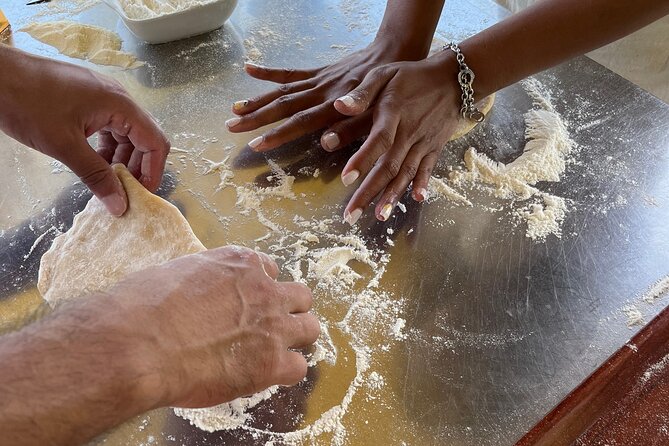
Then you move into the house kitchen, where the lesson begins in earnest. This is where the focus stays on technique: mixing, kneading, rolling, and shaping. You are not just learning a recipe list, you are building muscle memory for the pasta process.
Finally, you sit down to eat the meal you made. The menu includes:
- Starter: bruschetta with seasonal vegetables (with vegetables from the garden)
- Main: fresh pasta (you make it during the session)
- Dessert: a sweet of home
On top of that, wine often shows up during the meal part, tied to the family’s connections in the area.
Handmade Pasta Lessons: Dough Feel, Rolling, and the Pasta Machine
If you have ever tried to make fresh pasta at home, you know the hard part is not the recipe card. It is getting the dough texture right and rolling it to the point where it is thin enough to work, but not so fragile that it tears.
This class addresses that directly. You learn with flour and eggs as the foundation, then you focus on the “feel” of when the dough is perfect. That sounds vague until you are actually working it, because the instructor shows what to look for as you knead and bring the dough together.
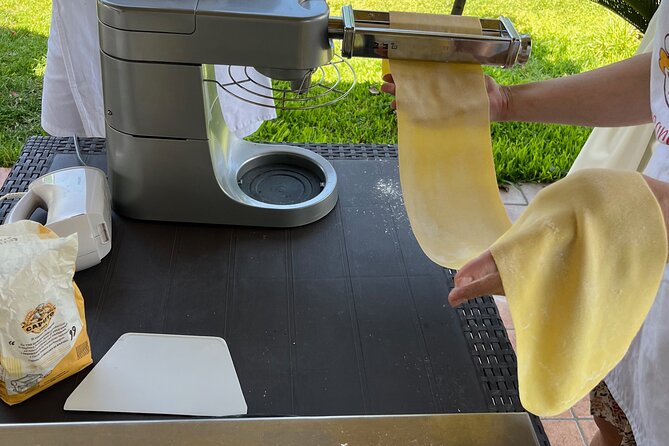
Rolling is the next skill, and it matters because it affects everything else: how the sauce clings, how the filling cooks, and how the pasta handles in shaping. You also get instruction on using a pasta machine, including practical technique for turning out consistent sheets.
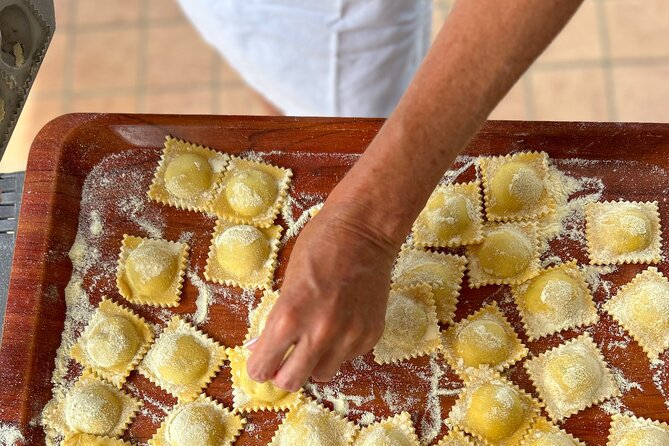
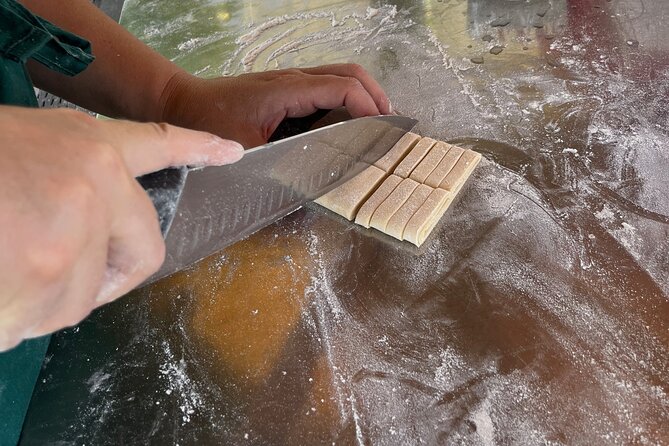
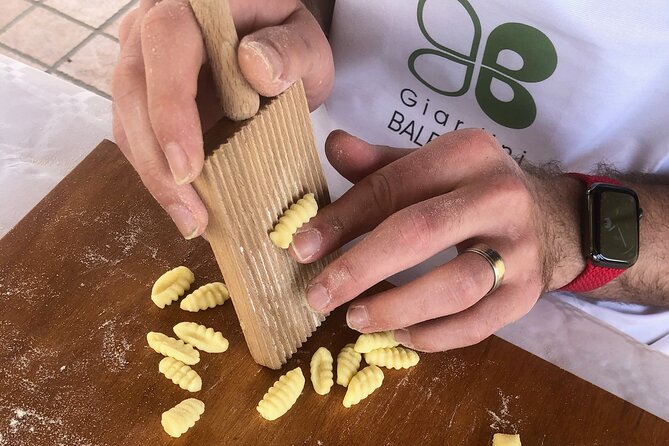
Depending on the session, you may shape pasta like ravioli and also learn another form such as fettuchini. The point is not just variety, it is learning how dough behaves in different shapes. Ravioli teaches sealing and portioning, while fettuchini teaches even cutting and handling.
This is also a good option if you like “how” more than “what.” You leave with a clearer mental checklist for the dough process, and that makes future homemade pasta less guesswork.
What You Eat: Bruschetta, Fresh Pasta, and a Sweet Finish
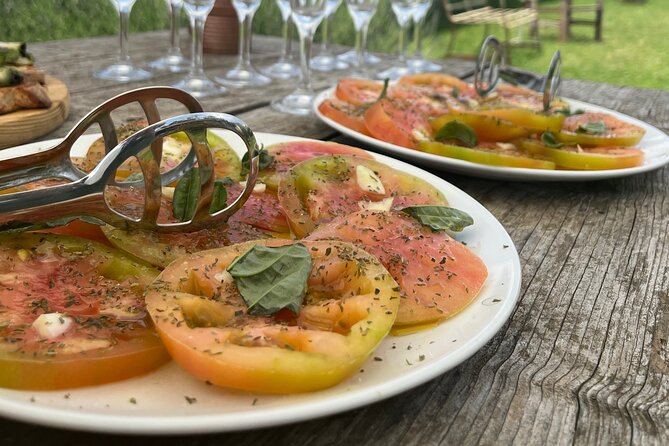
The meal is a core part of the value here. You do not just snack and move on. You eat what you prepared, and the class keeps the flavors tied to simple, recognizable Italian home cooking.
You begin with bruschetta with seasonal vegetables, using vegetables sourced from the garden. That means the starter tastes like the time of year, not like a standard canned substitute. It is also a nice pacing tool, because it gets you fed early without stealing the spotlight from the pasta work.
For the main course, you enjoy fresh pasta you made during the lesson. In past sessions, the pasta has included ravioli paired with a lemon sauce, and you may also create fettuchini. The filling can include ingredients like ricotta and spinach, depending on the menu for the day.
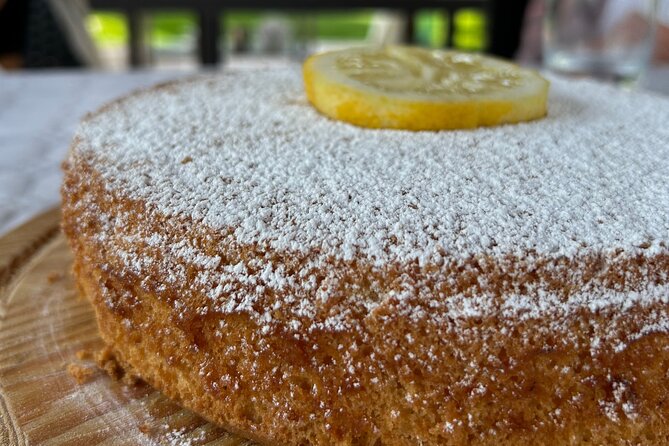
Dessert is labeled as a sweet of home. In real terms, it is the kind of finish you remember, cake or another homemade-style dessert, not a store-bought afterthought.
Wine is often part of the meal, and the host may introduce something like Gragnano wine connected to family vineyard ties. If you prefer to skip alcohol, you should ask what is available during booking, since the class includes food but alcohol details are not spelled out in the basic facts list.
More Naples tours, ruins, coast days, and city experiences to compare
Pompeii Without the Crowds: Why the Setting Works
Pompeii can be intense. The streets and sites pull you in, but the experience can turn into a checklist. This class gives you a different kind of Pompeii day, one that is slower and more human.
You work in a home kitchen, outdoors first, then indoors. That matters because it changes how you experience the region. Instead of only seeing ancient stone, you taste and cook with the ingredients that still define everyday life here.
There’s also a warm social element. The host, Sabrina, and her family help set the tone. In some sessions, people have met her husband and kids, and even a cat named Gary shows up as part of the normal household scene. That kind of detail is not a gimmick. It is the reason the class feels like being invited into a real home routine, not running through a performance.
If you are traveling with kids, this can be a standout day because it is active and sensory. You can talk to the instructor as you work, and kids usually do well with rolling and shaping because it is tangible.
If you are traveling solo or as a couple, the small group limit still helps. You get enough interaction without feeling like you are competing for attention.
Price and Value in Pompeii, Plus Transfer Tips
At $94.68 per person, this class sits in the mid-to-upper range for Pompeii experiences. The value comes from three things you get for that price: instruction time, a full meal, and the fact that you take home a skill. Many “food experiences” hand you a tasting and call it a day. Here, you mix, roll, and shape, then you eat your results.
Also, the meal is structured, with starter, main, and dessert, which helps you avoid adding extra food costs right after. And because it is roughly 3 hours, it can slot into your schedule without consuming your entire day.
Two cost notes to keep in mind:
- Gratuities are not included.
- Transfer is not included, but you can request a transfer and ask for information.
So if you are staying outside the main core, plan your rides ahead of time. The activity is near public transportation, which gives you options, but Rome-style, last-minute taxi math can get annoying. Booking a transfer if offered can be the easiest way to keep the day stress-free.
Practical Tips That Make the Class Easier
Here are a few things that help you get more out of a hands-on cooking day like this:
- Arrive a few minutes early to get settled at Via Messigno, 132. Starting on time keeps the dough timing and meal pacing right.
- Wear clothes you can work in, because fresh pasta dough gets everywhere during kneading and rolling, even with care.
- Ask questions while you cook, especially about dough texture and rolling thickness. That is where the technique really lands.
- Bring curiosity, not perfection. The best homemade pasta advice is usually about small fixes, not dramatic transformations.
- Keep water in mind. The class focuses on cooking and eating, and you will likely want to stay hydrated during the session.
If you have food allergies or dietary limits, the safe move is to ask during booking. The menu includes specific foods like eggs and flour by design, and the filling can include ingredients like ricotta and spinach in some sessions.
Should You Book This Pompeii Pasta Class?
You should book if you want a hands-on day that goes beyond ruins. I think it is a great match for couples, small families, and anyone who learns best by doing. The small group size, the kitchen setting, and the fact that you eat what you make combine into real value for the money.
You might pass if you want a primarily sightseeing-heavy Pompeii day. This class uses your time for cooking and eating, so it is not designed to replace a structured visit of the archaeological sites.
My decision rule is simple: if you want Pompeii through food and technique, this is one of the better ways to spend a few hours. If you want ruins first and cooking as an optional add-on later, you may prefer another activity and save this for a day where you can slow down.
FAQ
How long is the pasta cooking class in Pompeii?
The class runs for about 3 hours.
How much does the Pompeii pasta cooking class cost?
The price is $94.68 per person.
Where does the experience start and where does it end?
It starts at Via Messigno, 132, 80045 Pompei NA, Italy, and it ends back at the same meeting point.
What is included in the meal?
You’ll eat a starter of bruschetta with seasonal vegetables, a main course of fresh pasta, and a dessert described as a sweet of home.
Is transfer included?
No. Transfer is not included, though you can request a transfer and ask for information.
How big is the group?
This activity has a maximum of 10 travelers.
Is a mobile ticket provided?
Yes, the experience features a mobile ticket.
What is the cancellation policy?
You can cancel for free up to 24 hours in advance for a full refund. Changes inside 24 hours are not accepted, and refunds are not available if you cancel less than 24 hours before the start time.
More Workshops & Classes in Pompeii
More Cooking Classes in Pompeii
More Tour Reviews in Pompeii


Not for you? Here's more nearby things to do in Pompeii we have reviewed




Tour Reviews, compared.
 ★ 4.8Pompeii: Entry Ticket and Guided Tour with an ArchaeologistFrom $3519,459 reviews
 ★ 4.2Pompeii: Entry Ticket with Optional Audio GuideFrom $2612,360 reviews
 ★ 4.8Pompeii: Small Group Tour with an ArchaeologistFrom $4012,264 reviews
 ★ 4.3Pompeii Ruins & Mount Vesuvius Day TourFrom $12011,459 reviews
 ★ 4.6Sorrento, Positano and Amalfi Full-Day TourFrom $10710,988 reviews
 ★ 5.0Sorrento, Positano & Amalfi Coast – Small Group TourFrom $768,643 reviews
 ★ 4.6Catacombs of San Gennaro Entry Ticket & Guided TourFrom $157,941 reviews
★ 5.0Pompeii Small Group Tour with an ArchaeologistFrom $356,593 reviews
★ 4.6Catacombs of San Gennaro Entry Ticket & Guided TourFrom $157,941 reviews
★ 5.0Pompeii Small Group Tour with an ArchaeologistFrom $356,593 reviews
Browse the lists this tour appears in