
Tour review · TOUR REVIEWS
Small-Group Tour in Pompeii with a Real Archeologist, ticket included
Pompeii hits different when you walk it with an archaeologist. In this small-group format, you get a fast, human-sized look at houses, streets, and public spaces before the day swallows you in heat. I like that most stops come with admission handled, so you spend your energy on seeing, not queuing.
Two things I especially like: the priority ticket entrance for the Archaeological Park of Pompeii, and the way the guide connects details on the ground to Roman everyday life. One thing to consider is that the schedule is tight, with short time at each stop, so you may feel a little rushed if you’re the type who likes to linger.
Key things to know before you go
- Max 15 travelers, so your guide can actually answer questions and keep the group together
- Headsets included, which helps a lot when you’re moving through busy, echoing areas
- Priority Park entry, plus a mobile ticket, so you’re not stuck at the start
- Admission tickets included for most stops, but the Archaeological Park segment notes admission not included for that specific stop
- 2.5 hours on foot, with many short 15-minute moments across Pompeii’s most famous buildings
Pompeii in 2.5 Hours, and How It Feels
This tour is built for a single goal: getting you into the “why does this place matter?” mindset quickly. You’re in Pompeii long enough to see major highlights, but not long enough to wander aimlessly. The route moves house to house, then out to public life, then back toward the park’s big set pieces.
Expect the pacing to be brisk. Most stops are around 15 minutes, so you’ll get the essential story beats for each site, then move on. That works well if you’re visiting for the first time and want context. If you’re the kind of visitor who likes to sit with one mosaic for 30 minutes, you’ll probably want to add extra independent time after the tour.
The duration is about 2 hours 30 minutes, offered in English, with a maximum of 15 travelers. It’s also commonly booked in advance, averaging 24 days ahead, which is a polite hint that you should lock your spot if you’re traveling in peak season.
More Naples tours, ruins, coast days, and city experiences to compare


Small Group, Headsets, and Real Archaeology on the Ground
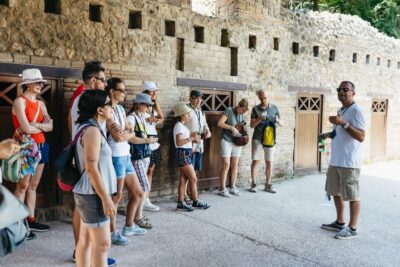
I love small groups in Pompeii because the ruins are dense and confusing. With a group this size, you can keep your bearings and follow what the guide is pointing at without losing your spot every five steps.
A big practical plus: headsets are included. Pompeii can be loud even when it feels quiet. You’ll be hearing directions and explanations clearly while you walk, instead of standing close to the guide and accidentally turning the ruins into a bottleneck.
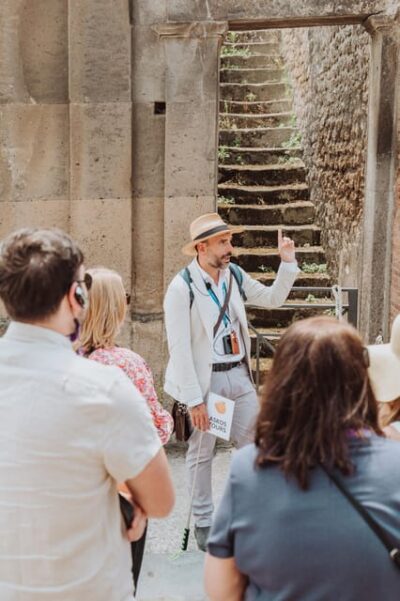
The tour is led by a real archaeologist guide, and that matters. You’re not just getting tourist facts. You get interpretation: how people lived, how buildings were organized, and how archaeologists think about what survived and what didn’t. In practice, that means you’ll look at things like a mosaic or a doorway and understand what it likely meant to Pompeii’s residents, not just what it looks like today.
In English tours, the guide names you may see include Paulo, Teresa (listed in the app as Askos Tours for some passengers), and Alfredo. Different guides bring different voices, but the consistent theme is the same: Roman life is the focus.
Priority Entry, Mobile Ticket, and the Start Line at Hotel Vittoria
The logistics are designed to reduce wasted time at the beginning. You meet at Hotel Vittoria, Piazza Esedra, 80045 Pompei NA, Italy, and the tour ends back there. That round-trip setup is simple and comforting when you’re navigating a busy area.
You also get a mobile ticket. Even if you’re traveling light, having the ticket on your phone reduces friction at entry points. And you’ll have priority ticket entrance for the Archaeological Park of Pompeii, which is especially useful on days when lines form fast.
One more practical note: the tour listing says confirmation is received at booking, and the experience runs with good weather required. So if you’re planning around a tight itinerary, keep a little flexibility for weather. If it’s canceled due to poor weather, you should expect a different date or a full refund.
Casa del Poeta Tragico and the Cave Canem Floor Mosaic
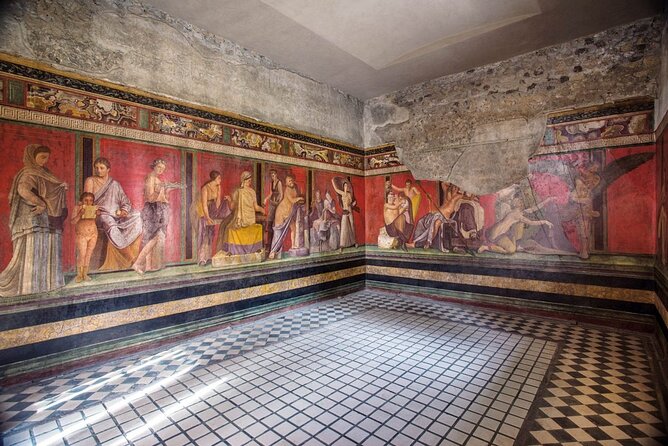
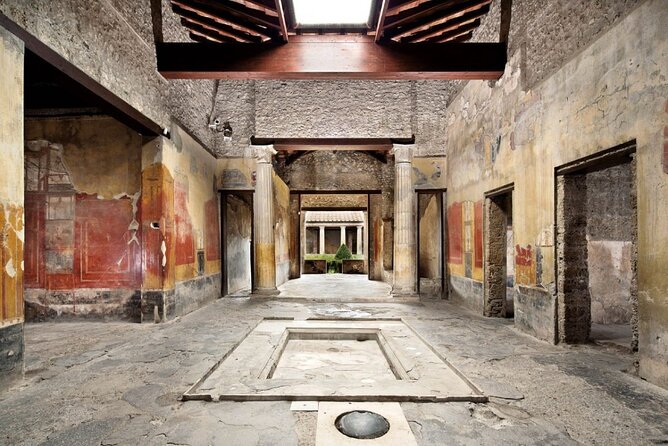
The tour opens inside Casa del Poeta Tragico. This is a house of the imperial age, an elegant window into the kind of wealth and status that shaped Pompeii’s neighborhoods. You’re not just viewing rooms, you’re learning how elite domestic spaces were arranged to signal culture and power.
The star here is the floor mosaic called Cave Canem, the warning image you’ll spot in guidebooks and photos. The phrase basically means beware of the dog, and the mosaic works like a message at the threshold. It’s a great early stop because it teaches you how Pompeii used art to communicate, not just decorate.
A drawback is time. With about 15 minutes, you’ll see the main idea and the key details, but not every corner. If you’re hoping for a slow, gallery-style experience, this will feel like a quick introduction. Still, as a first Pompeii stop, it sets the tone: people lived among imagery and symbolism, right where you’re standing.
Casa dei Vettii: Luxury, Names, and the Power of Short Stops
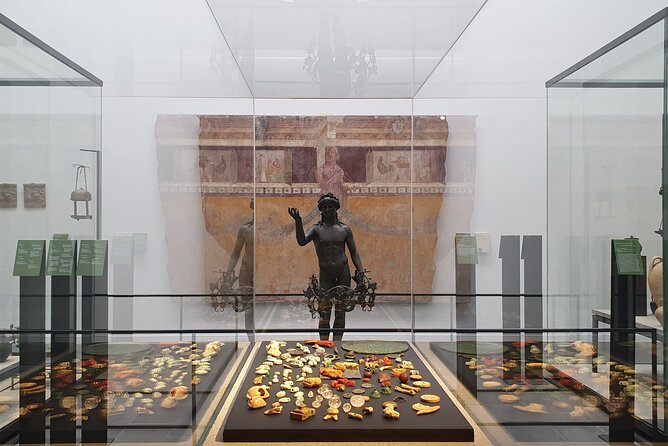
Next comes Casa dei Vettii, located in vicolo dei Vettii. This house is named for its owners, Aulo Vettio Restituto and Aulo Vettio Conviva, and it’s one of Pompeii’s most impressive residential stops. It’s here that you start to notice the difference between a rich home and an ordinary one.
Why this house is worth your time is not only the scale. It’s the way the home communicates ownership and sophistication. Even in a short visit, you get enough context to see why guides spend time on elite households: they’re the best preserved places where art, money, and daily routine overlap.
If you hate waiting, keep your expectations realistic. One passenger experience included a wait at the House of Vettii, with the guide saying it would take about 20 minutes, but then the group ended up missing the full promised experience. The good news is that the tour provides a day ticket experience that lets you explore afterward on your own. So if you feel you skimmed something here, you have a backup option once the guided portion ends.




Lupanar: What You’ll See, and How to Handle the Topic
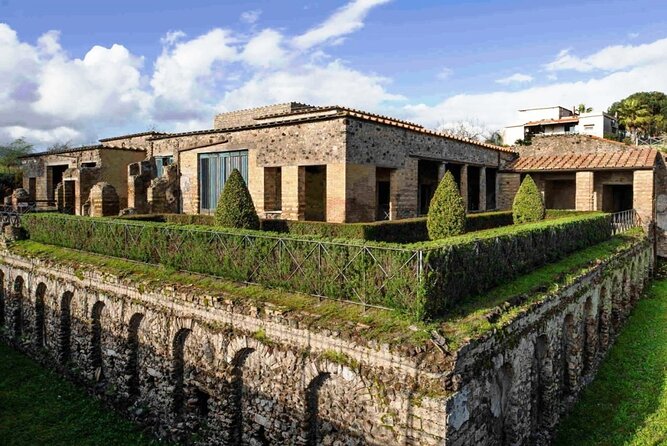
The tour then heads to the Lupanar, a two-story building linked to prostitution and business. It’s one of the most visited sites for a reason: the structure is specific, and the layout tells a story.
The description you’ll hear focuses on how the space worked. The building is laid out with five rooms on the ground floor and five on the upper one, and each room had a concrete bed, with some kind of sleeping surface described. It’s not a comfortable topic, but Pompeii is not a polite ghost town. It’s a real city, including its commerce and exploitation.
If you want to be thoughtful about the subject, bring your own comfort level. The tour is factual and interpretive, not sensational. Still, expect the emotional tone to be heavier here than in the houses or the forum.
Time is again tight at about 15 minutes. That’s enough to understand the building’s organization and what visitors come to see, but it won’t cover every detail someone could discuss. If this stop is a priority for you, plan to return later if the rest of the route moves fast.
Pompeii’s Forum: Pedestrians Only, and Statues Gone
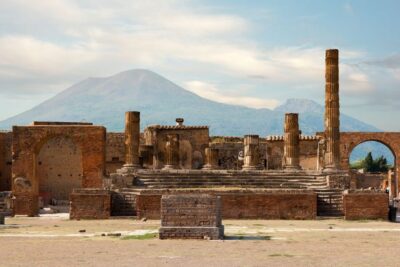
Now you shift from private rooms to public power at the Foro di Pompeya. This was reserved for pedestrians and carts were not allowed, which you’ll feel immediately as you picture street life. The forum itself is about 142 metres long and 38 metres wide, meaning you can understand its scale even after statues are long gone.
Today, the forum is bare of statues, and you’ll also notice the ornate flooring and marble work is heavily altered. The explanation you get helps you make sense of why. After the eruption, the area was dug up and elements may have been re-used in other works. That’s a key Pompeii lesson: the ruins were not untouched for centuries. People came back, salvaged, and changed what was left.
This stop is valuable because the forum is where Roman civic identity lived. It’s also where the guides’ ability to connect architecture to behavior shows up. You’ll leave with a clearer picture of how people moved, gathered, and performed public roles.
The quick pace can be a drawback if you like to photograph wide views for a long time. But if you keep walking, the forum gives you a strong “big city” sense without dragging your schedule.
Suburban Baths and Casa del Fauno: Movement, Water, and Status
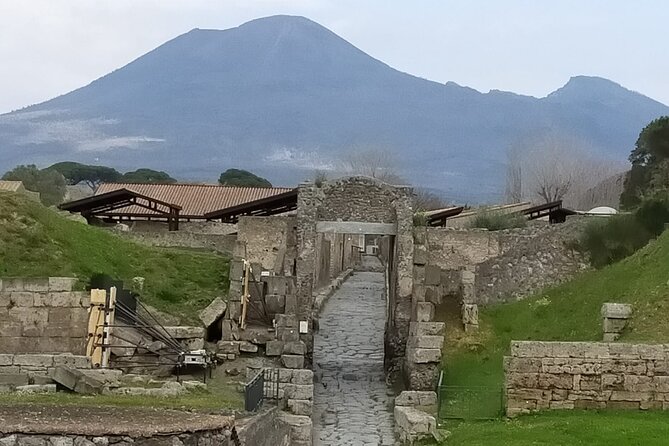
Then you move outward to the Suburban Baths, which sat outside the city walls. The idea here is practical: these baths were likely used by travelers, not only by Pompeii residents. You’ll hear about the nearby port area too, with mention of large rocks where boats could moor. That detail is important, because it turns the baths from an isolated building into part of Pompeii’s travel and trade flow.
The tour’s angle helps you imagine arrivals and departures. You’re not just studying ruins, you’re seeing how Rome’s world worked across land and water. If you’re a first-time visitor, this stop also broadens your view beyond the famous central core.
From baths, you head to Casa del Fauno. This house is tied to a bronze statue of a faun placed in the impluvium, the open basin area for collecting rainwater. That one detail is a great teaching moment, because it shows how art and architecture were integrated into the household system, not stuck in separate “display” areas.
Again, the short stop length means you’ll get the main idea and the key visual anchor, but you won’t see everything in depth. The tradeoff is that you’ll reach the next highlights while your energy is still solid.
Casa del Menandro, the Amphitheatre Area, and Apollo’s Cult
Casa del Menandro is a major domestic stop, covering about 2,000 square metres. It gets its name from an fresco tied to the poet Menandro, and the information you’ll take away is that this was not just a house, it was a statement of culture. One striking detail you’ll hear is that archaeologists found 118 objects in silver, likely tableware of great value.
You’ll also get pointed at fresco themes from the Trojan War, including the death of Laocoonte, plus scenes connected to Cassandra and Ulysses. Even with limited time, those stories help you read the art as deliberate storytelling, not random decoration.
After that, the route moves into the Archaeological Park of Pompeii area for the amphitheatre and adjacent spaces. The amphitheatre could hold up to 20,000 people across three levels. You’ll hear about protections used in hot summer months, including a dark linen covering for spectators, which makes the space feel less like a monument and more like a functioning venue.
There’s also a gymnasium nearby, used by young people to work out. That keeps Pompeii from being only about tragedy and death. It was also about sports, spectacle, and daily training rhythms.
Important practical note: this park stop specifically notes admission ticket not included for that part. You do have priority entry to the park, but before you go, check what your confirmation covers so you know whether anything extra is required once you reach the amphitheatre area.
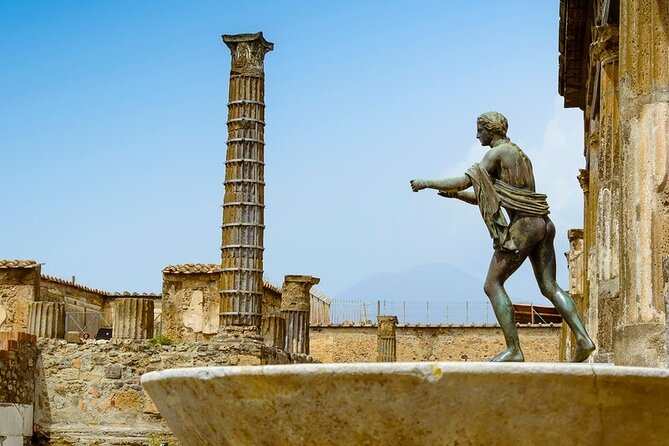
Finally, the tour includes the Temple of Apollo. The cult of Apollo arrived before the eruption in 79 A.C., and it’s explained how worship patterns shifted, with Apollo losing followers as Jupiter became stronger. You’ll see reference to a bronze statue of Apollo with bow and arrow, plus a statue connected to the goddess Diana.
This stop is a smart ending point because it takes you from private life into public religious identity. Roman religion was political and social. When you connect that, you understand why temples matter even when statues are missing.
Comfort in the Heat, and How to Make the Walk Worth It
Pompeii in the summer is hot, and this route is on foot. The good part is that the stops are spaced so you’re not stuck in the same sweltering patch for hours. In one guide experience, the focus on shaded spots and shade breaks along the main road made the walk feel manageable, which is exactly what you should aim for.
Here’s what I’d plan for:
- Wear good walking shoes, because you’re crossing uneven ground and stone edges.
- Bring water and treat it like a non-negotiable. Even a “short” stop involves heat exposure while you queue, walk, and listen.
- Expect photos to be quick. The schedule moves, so take your key shots and keep moving.
If you get to the end and want more, the day ticket concept means you can continue exploring afterward on your own. That’s a real advantage in Pompeii, because no guide route will ever match your personal obsession level. If you fall in love with a mosaic, you can go back.
Value at $66.23: What You’re Actually Paying For
At $66.23 per person, this tour is priced in a way that makes sense for what you get: a real archaeologist guide, headsets, priority entry into the park area, a mobile ticket, and admission tickets included for most of the listed stops.
What you should weigh is that the visit is short by design. You’re not buying hours of guided commentary across every room. You’re buying a structured introduction to the sites that teach you how to read Pompeii quickly.
Value improves when you compare effort saved. Priority entry means less time guessing where to go and less time standing around with your water melting. Admission handling for most stops means you don’t have to juggle separate ticket lines for every house.
The only caution on value is the park stop that notes admission not included for that specific segment. That could affect your total if the amphitheatre area requires an additional ticket beyond what you already have. The best move is simple: verify your confirmation details so you’re not surprised mid-park.
Should You Book This Pompeii Small-Group Tour?
Book it if:
- You want a guided Pompeii that teaches you how the city worked, not just what it looks like.
- You prefer small groups and clear listening support with headsets.
- You want a priority entry head start and mostly included admissions for the core highlights.
- You like the idea of a short, punchy route, then returning on your own after the tour ends.
Skip it or add extra planning if:
- You want long stops at fewer sites. This tour is fast.
- You’re sensitive to topics covered at the Lupanar and need extra time to process.
- You need full certainty about the amphitheatre area admission, since the park segment notes admission not included for that specific stop.
If your goal is to get your bearings fast and leave Pompeii with a clearer, more human picture of Roman life, this is a strong choice. The real value is the archaeologist-led explanations in a group small enough to keep the story coherent while you walk.
FAQ
How long is the Pompeii tour?
It lasts about 2 hours 30 minutes.
What language is the tour offered in?
The tour is offered in English.
What’s included in the price?
Included are the guide service for the Pompeii ruins tour in your language, a priority ticket entrance for the Archaeological Park of Pompeii, and headsets. The itinerary also lists admission tickets included for most stops.
What size is the group?
The maximum group size is 15 travelers.
Where do we meet for the tour?
You start at Hotel Vittoria, Piazza Esedra, 80045 Pompei NA, Italy, and the tour ends back at the meeting point.
Is transportation to and from Pompeii included?
No, private transportation is not included.
What if weather is poor?
The experience requires good weather. If it’s canceled due to poor weather, you’ll be offered a different date or a full refund.
More Tickets in Pompeii


More Tours in Pompeii

More Tour Reviews in Pompeii

Not for you? Here's more nearby things to do in Pompeii we have reviewed








Tour Reviews, compared.
 ★ 4.8Pompeii: Entry Ticket and Guided Tour with an ArchaeologistFrom $3519,459 reviews
 ★ 4.2Pompeii: Entry Ticket with Optional Audio GuideFrom $2612,360 reviews
 ★ 4.8Pompeii: Small Group Tour with an ArchaeologistFrom $4012,264 reviews
 ★ 4.3Pompeii Ruins & Mount Vesuvius Day TourFrom $12011,459 reviews
 ★ 4.6Sorrento, Positano and Amalfi Full-Day TourFrom $10710,988 reviews
 ★ 5.0Sorrento, Positano & Amalfi Coast – Small Group TourFrom $768,643 reviews
 ★ 4.6Catacombs of San Gennaro Entry Ticket & Guided TourFrom $157,941 reviews
★ 5.0Pompeii Small Group Tour with an ArchaeologistFrom $356,593 reviews
★ 4.6Catacombs of San Gennaro Entry Ticket & Guided TourFrom $157,941 reviews
★ 5.0Pompeii Small Group Tour with an ArchaeologistFrom $356,593 reviews