
Tour review · TOUR REVIEWS
2-Hour Pompeii Child-Friendly Tour
That first step into Pompeii feels like time travel.
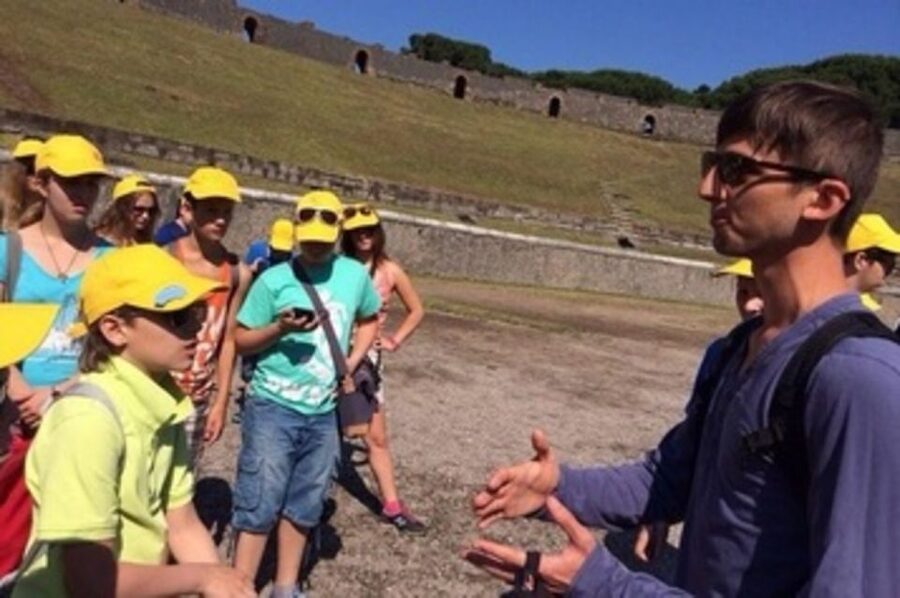
This 2-hour Pompeii child-friendly tour is built to keep kids curious while giving parents real structure and context. I like that it uses tablets, reconstructions, and multimedia to explain what you are seeing, not just recite dates.
Two more things I really like: the route hits big, understandable zones quickly, and it includes key spaces that show daily life, from temples and markets to baths and homes. The one drawback to plan for is that it is a walking tour with no transportation, so you need kids (and adults) ready for uneven ancient surfaces for the full 2 hours.
There is also a small accessibility inconsistency worth double-checking. The activity is listed as wheelchair accessible, but the added info says it is not suitable for wheelchair users, so you will want to confirm what that means for your specific needs before booking.
Key highlights worth knowing before you go
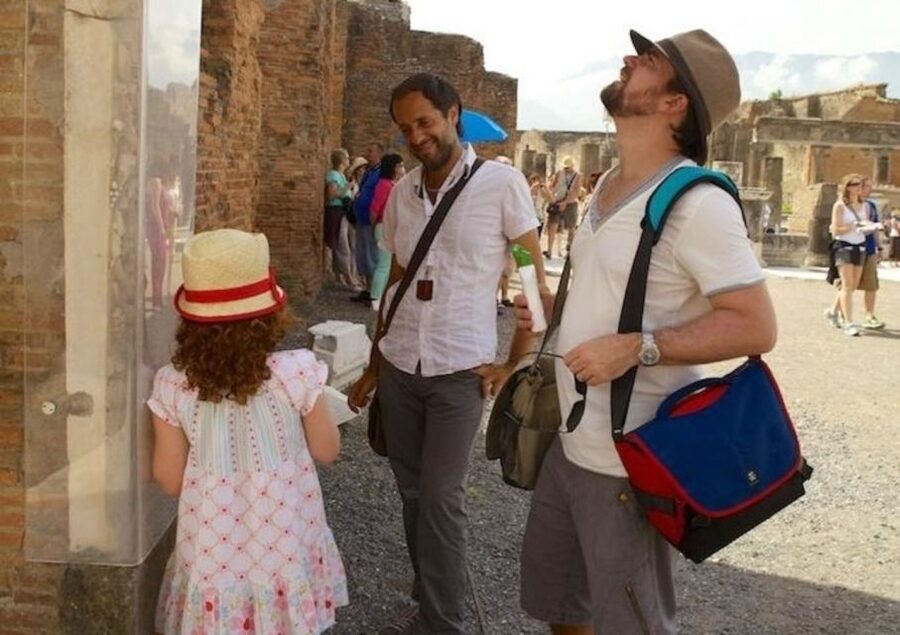
- Porta Marina Superiore start: meet at the main Pompeii entrance on the Hortus side, with your guide holding a name sign
- Skip-the-line entry handled for you: your guide can buy tickets for fast access in about 5 to 10 minutes
- Tablet-led storytelling for kids: multimedia and reconstructions help the ruins click without boredom
- Short, focused time blocks: many stops run about 10 to 20 minutes, perfect for families who have limited patience
- A full “life in Pompeii” mix: temples, forum spaces, baths, a bakery stop, theaters, and homes
- Private group format: easier pacing and more guide attention than a large group tour
Getting oriented fast at Porta Marina Superiore
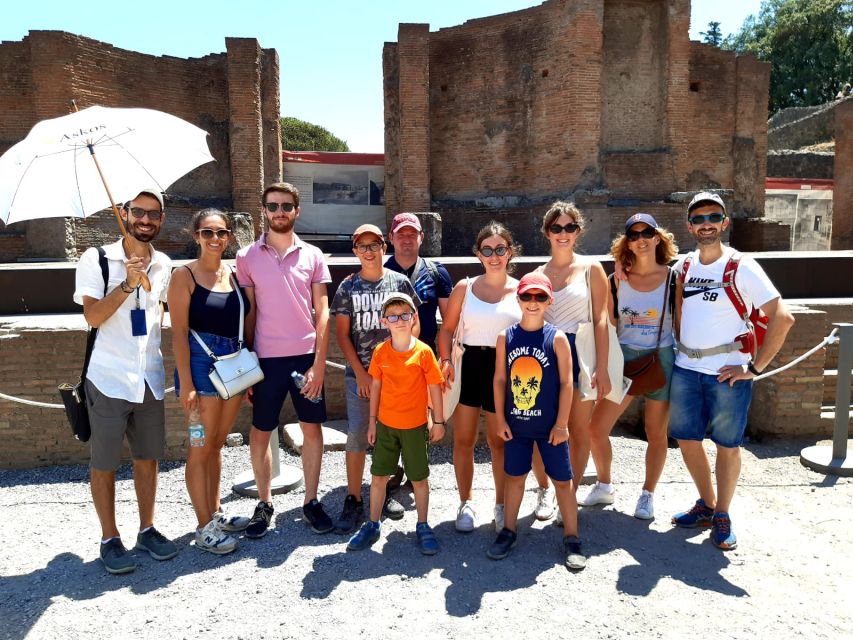
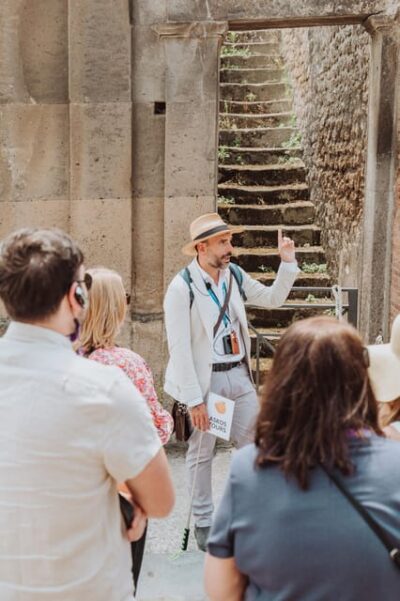
You start at the Pompeii main entrance called Porta Marina Superiore, meeting your guide on the opposite side of the bar-restaurant Hortus. The guide holds a sign with your name, which is a simple detail but a big stress reducer when you are traveling with kids.
This is also where the tour starts solving the most common Pompeii problem, you can lose time just figuring out where to go and how to get in. Your guide helps with admission fees and can handle ticket buying so you can skip the ticket line and get moving in about 5 to 10 minutes.
Because this is a private group, the guide can calibrate pace for the age range you show up with. That matters in Pompeii, where a wrong turn or a stalled moment can ripple into the whole visit. Here, the format is designed to keep you moving, yet not rushed.
One practical tip for families: before you meet your guide, use the restroom if you can and do a quick snack check. Pompeii ruins are not the place to hunt for food once you are inside the site.
More Naples tours, ruins, coast days, and city experiences to compare
Tablets, reconstructions, and a pace kids can actually handle
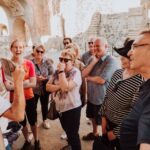
The tour is explicitly designed to capture attention from both kids and parents. The method is not just “more kid talk.” It uses tablets, reconstructions, and multimedia material to explain what you are looking at, including how buried Pompeii changed what we understand.
That tablet-based approach is handy because Pompeii is crowded with details and confusion. With multimedia prompts, kids can connect the dots faster. Parents usually benefit too, because the guide can focus on clarity rather than trying to translate everything from scratch.
The time structure is family-friendly. Many stops are guided for about 10 minutes, while a few key houses run closer to 20 minutes. You get enough time to look around and ask questions without stretching the attention span thin.
Expect a lot of “see this, now understand it” moments. Even when you are standing in ruins, the tour’s tools aim to help you picture how the space functioned in everyday Roman life.
You should also be ready for walking on ancient stone and navigating uneven ground. This tour gives you no transportation, so sturdy shoes matter more than you might think.
Porta Marina to the Temple of Apollo: a Roman city map in miniature
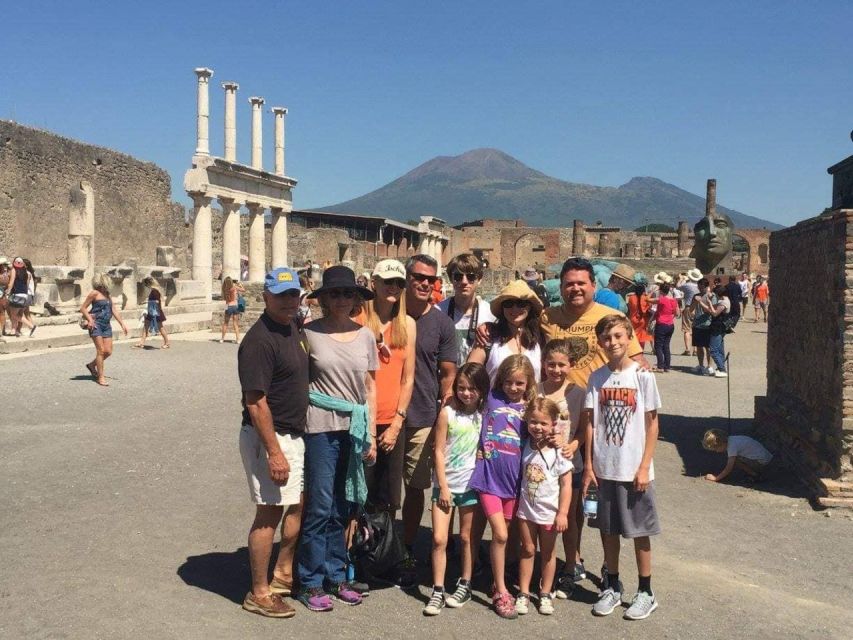
The first on-site stop is Porta Marina, which you visit with a guided orientation for about 10 minutes. Think of the gate as Pompeii’s first lesson. It is a physical reminder that this was not a museum piece, it was a working city with entrances, movement, and trade.
Next comes the Temple of Apollo, another short guided visit of around 10 minutes. Even if your kids do not care about religion in the abstract, a temple stop still teaches something concrete: Roman cities were organized around public beliefs and public space.
From there you move into the forum zone, and this is where the tour’s “kid-friendly” plan starts paying off. The Foro Civile di Pompei stop is guided for about 20 minutes, giving you room to understand the square as the city’s daily center.
The forum area includes market temples and municipal buildings, so you see how civic life blended with commerce. For kids, that can be easier than memorizing names. They can track the simple story: people met here, bought things here, discussed things here.
Parents often like that this stop is longer. A forum is the kind of place where you can watch the city “logic” unfold as you look around, and the guide helps you read it rather than just stare at stone.
Basilica and courtroom life: how business worked in Pompeii
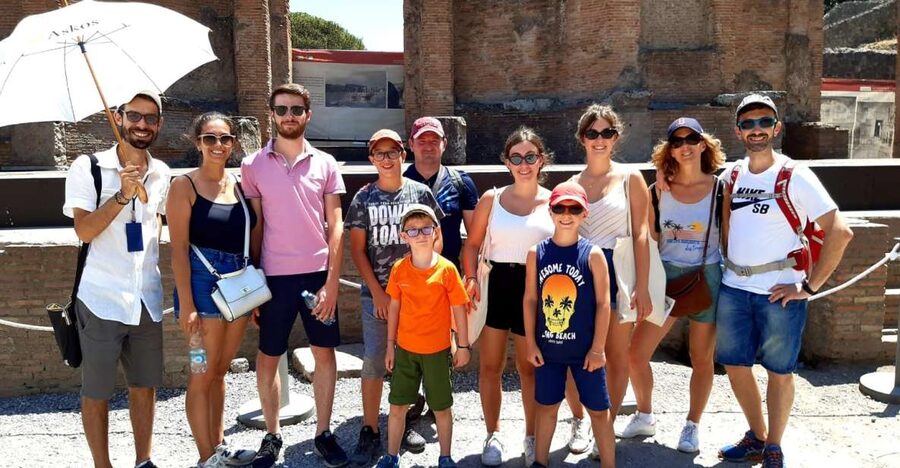
The Basilica, described as a court house, is a focused guided stop for about 10 minutes. Even from the outside, a basilica functions as a clue. It signals where official decisions and disputes were handled, and it tells you that Roman civic life had a formal side, not just street-level hustle.
In a family tour, this is a good choice because it offers a relatable angle. You can frame the basilica as the place where arguments were settled and agreements were made. Kids may not use those words, but they get the idea that rules and structure mattered.
What I like about this style of stop is the balance. You are not dragging kids through endless lecture mode. You are getting a short guided explanation tied to the actual space in front of you.
The guide’s tablet and multimedia tools likely help here too, since a basilica can be confusing if you expect it to look like a modern building. With reconstructions, the gap between ruin and original function can shrink fast.
If your group tends to move slowly, this is a good stop to ask questions. Court house or civic building, it is one of those places where a quick explanation changes how you interpret everything else nearby.
Houses of everyday life: Menander, the Faun, and the Vettii
You spend time inside or around several prominent houses, which is often the most memorable part of Pompeii for families. The tour includes the House of Menander for about 20 minutes, plus additional house stops at the House of the Faun and the House of the Vettii.
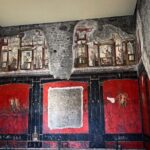
Why I like this cluster: it shows that Pompeii’s life was not only public squares and temples. Houses reflect wealth, routines, and how families structured their rooms and spaces.
The House of Menander stop being longer helps because houses can feel like a maze. With a guide and kid-focused tools, you are less likely to feel lost. You get time to walk through, look around, and connect what you see to how people lived.
The other house visits are shorter, about guided 10 minutes each in the flow. That makes sense for children. You still get the “oh wow, people actually lived here” feeling, without turning the tour into a long indoor marathon.
If you are traveling with teens, they often like the contrast between the public forum world and the private home world. If you are traveling with younger kids, the reconstructions and multimedia prompts can provide an anchor, so the ruins feel like rooms again, not piles of stone.
One practical consideration: houses can be visually busy. Bring a “stop and point” strategy to keep everyone engaged. When the guide explains a feature, have kids point at the same spot the guide highlights. It sounds simple, but it improves focus.



Baths, a theater, and a thermopolium: see Pompeii after work
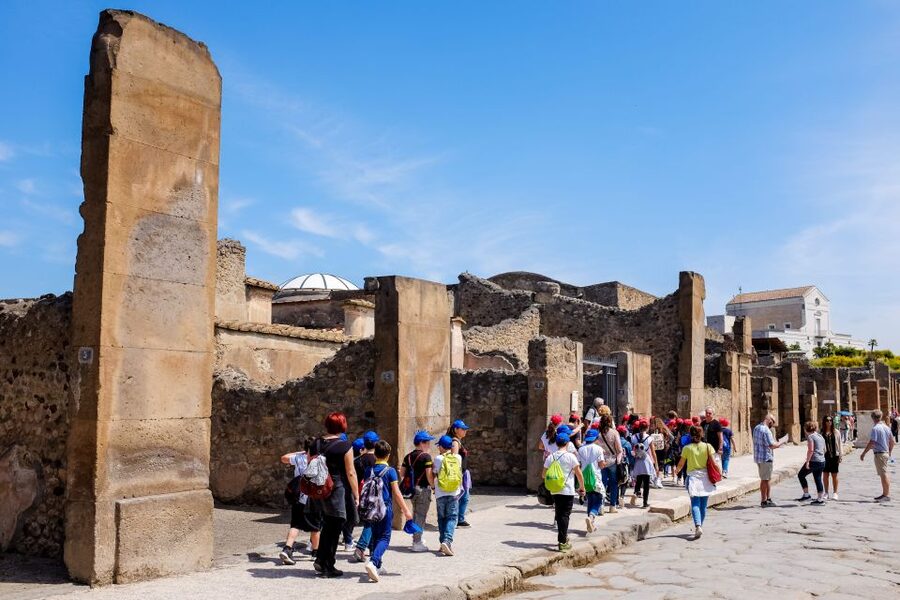
Pompeii is not just about monuments. This tour also takes you into spaces where people ate, relaxed, and spent free time.
The Forum Baths visit is guided for about 10 minutes. Baths are an ideal stop for kids because they are easy to imagine as places to hang out. They also give parents a satisfying payoff, since Pompeii is full of everyday architecture, not only grand buildings.
Next comes the Large Theatre, again guided for about 10 minutes. A theater stop helps kids understand that entertainment was part of city life. It is also a natural photo moment, and guides can usually turn big seating and stage shapes into a simple story for children.
The tour also includes a Thermopolium stop, guided for about 10 minutes. A thermopolium is essentially a food spot, which can make the visit feel immediate. Kids understand snacks and quick meals faster than they understand civic law or temple rituals.
And there is mention of the bakery in the tour highlights. Even when stops are brief, that mix matters. You walk away seeing Pompeii as a place with schedules and routines, not just ruins.
One thing to keep in mind: these stops are close in theme but spread across the site. If your kids get restless, ask your guide for a small focus task. For example, ask them to find one feature the guide mentions and point it out at each stop.
Price and value: what $212.41 buys your family
At $212.41 per person, this is not a budget tour. But value in Pompeii is mostly about time and clarity, not about squeezing in more stops.
Here is what you get that supports the price:
- A certified guide who is focused on family attention
- Admission fees included
- Skip-the-line entry, with ticket buying handled by the guide in about 5 to 10 minutes
- Tablet, reconstructions, and multimedia designed to make the ruins understandable for kids
- A private group format, which usually means less waiting and more responsive pacing
- A full 2-hour route that covers major Pompeii highlights without turning it into an all-day grind
For families, the biggest money saver is not skipping the line alone, it is avoiding confusion. Pompeii is big, and without a clear plan you can end up walking extra distances or missing the best spaces for kids.
If your family thrives with structure and likes short, guided segments, this tour fits the spend. If you prefer long self-guided wandering or you have kids who can handle several hours on their own, you might decide to DIY. But for most families, a guide that can translate the site fast is worth it.
Who this tour is best for (and one you should watch)
This 2-hour Pompeii child-friendly tour is a strong match for:
- Families with kids who get bored with long explanations
- Parents who want Roman life context without doing all the research themselves
- Groups that value a private group pace and fewer logistics headaches
- Travelers who want a highlights route that still feels like real places
It is also offered in English and Italian, so you can pick the language that keeps everyone engaged.
Now the caution. This is a walking tour, with no transportation included. If anyone in your group struggles with uneven ground or long standing, plan extra breaks and consider timing carefully.
On wheelchair access, the data is a little contradictory. The activity is listed as wheelchair accessible, but the additional info says it is not suitable for wheelchair users. If that applies to you, I would not assume. Confirm directly with the provider, Askos Tours, and ask how the route works in practice.
Should you book? My take on Askos Tours’ Pompeii family format
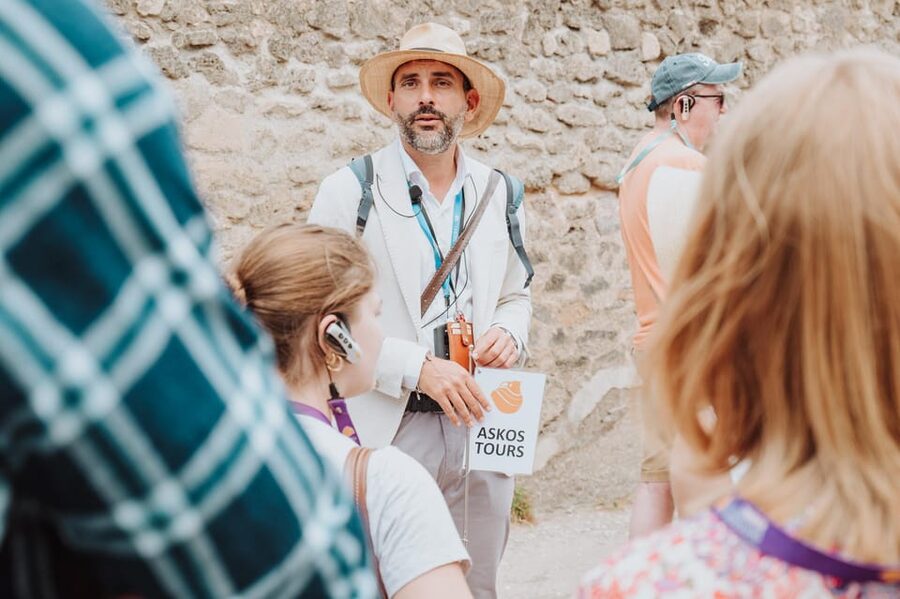
If your goal is to make Pompeii make sense for kids and still satisfy adults, I think this is a smart booking. The stops are chosen around recognizable themes: gates, civic spaces, houses, baths, a theater, and a food spot. The guide tools, especially tablets and multimedia, are there for a reason, and they can prevent that classic problem where kids see stone but feel nothing.
Also, one clear theme from the strongest feedback is that the guide does a good job keeping both parents and kids engaged. That is the real win on a family tour. You want everyone to feel included, not just tolerated.
Just go in with realistic expectations. Two hours is enough for a highlights sweep, not enough for every corner of Pompeii. Wear solid shoes, bring patience for crowded moments near entrances, and let the guide handle the ticket and pacing work.
If you are ready for a guided, family-friendly sprint through key Roman life spaces, book it. If your group needs a slower, longer plan with lots of free time, you might prefer a different format.
FAQ
How long is the 2-hour Pompeii Child-Friendly Tour?
The tour duration is 2 hours.
Where do we meet for the tour?
Meet your guide at Porta Marina Superiore, the Pompeii main entrance, on the opposite side of the bar-restaurant Hortus.
Does this tour include admission fees?
Yes. Admission fees are included.
Is there skip-the-line entry?
Yes. The tour includes skip-the-ticket-line entry, and the guide can buy tickets for you in about 5 to 10 minutes.
What places are included in the visit?
The tour covers major Pompeii highlights including Porta Marina, the Temple of Apollo, the Foro Civile di Pompei, the Basilica (court house), the House of Menander, the Forum Baths, the House of the Faun, the Large Theatre, the House of the Vettii, and a Thermopolium.
What languages are the tours offered in?
The live guide offers English and Italian.
Is the tour wheelchair accessible?
The activity is listed as wheelchair accessible, but the additional info also says it is not suitable for wheelchair users. You should confirm details with Askos Tours before booking.
Is entrance free on the first Sunday of each month?
Yes, entrance is free of charge on the first Sunday of each month, but tickets cannot be reserved ahead of time, so entry is not guaranteed.
More 2-Hour Experiences in Pompei Campania
More Tours in Pompei Campania

More Tour Reviews in Pompei Campania

Not for you? Here's more nearby things to do in Pompei Campania we have reviewed






Tour Reviews, compared.
 ★ 4.8Pompeii: Entry Ticket and Guided Tour with an ArchaeologistFrom $3519,459 reviews
 ★ 4.2Pompeii: Entry Ticket with Optional Audio GuideFrom $2612,360 reviews
 ★ 4.8Pompeii: Small Group Tour with an ArchaeologistFrom $4012,264 reviews
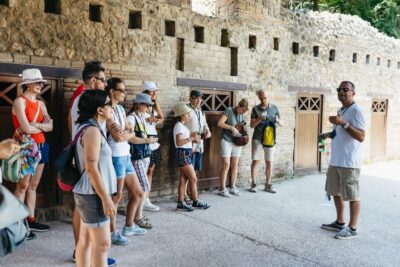 ★ 4.3Pompeii Ruins & Mount Vesuvius Day TourFrom $12011,459 reviews
 ★ 4.6Sorrento, Positano and Amalfi Full-Day TourFrom $10710,988 reviews
 ★ 5.0Sorrento, Positano & Amalfi Coast – Small Group TourFrom $768,643 reviews
 ★ 4.6Catacombs of San Gennaro Entry Ticket & Guided TourFrom $157,941 reviews
★ 5.0Pompeii Small Group Tour with an ArchaeologistFrom $356,593 reviews
★ 4.6Catacombs of San Gennaro Entry Ticket & Guided TourFrom $157,941 reviews
★ 5.0Pompeii Small Group Tour with an ArchaeologistFrom $356,593 reviews
Browse the lists this tour appears in