
Tour review · TOUR REVIEWS
Pompeii: 2-Hour Guided Tour with an Archaeologist
Pompeii is still shocked into view. This 2-hour guided tour brings the story of 79 AD back to life, with an archaeologist guide walking you through the key parts of western Pompeii. You’ll cover the Forum zone, major public buildings, and homes, then connect it all to how molten ash sealed the city and how it was rediscovered later.
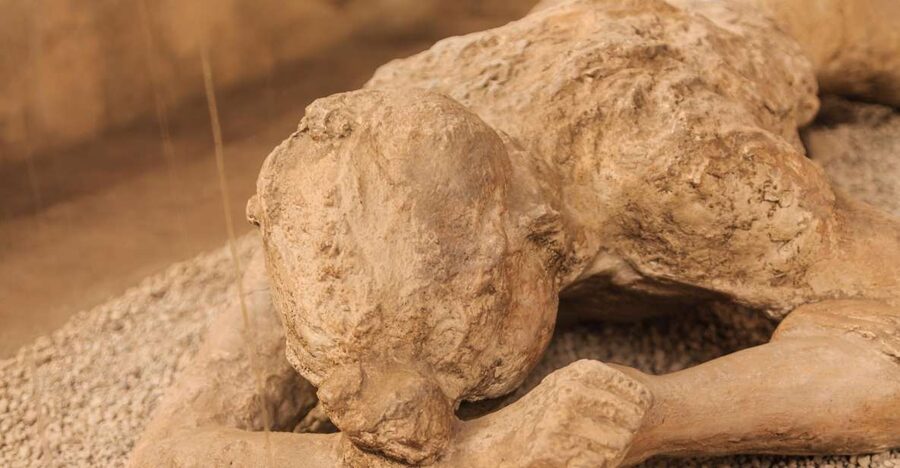
I especially like how the tour is built around meaning, not just ruins. Stops like the Forum and thermal baths help you picture how people used public space, how politics worked in everyday life, and why certain buildings mattered. And the tour doesn’t treat the tragedy like a museum label, it points you to the human detail through plaster casts.
The main drawback to plan around is time. Two hours is a smart, focused window, but Pompeii is huge, so you will not have time to linger like you would on a longer self-guided visit.
Key things I’d prioritize on this Pompeii archaeologist tour
- Forum-first route that links politics, daily routines, and architecture in a way that sticks.
- Expert archaeologist insights from storytelling guides including names like Rosalina, Tonia, Enzo, Paola, and Giancarlo.
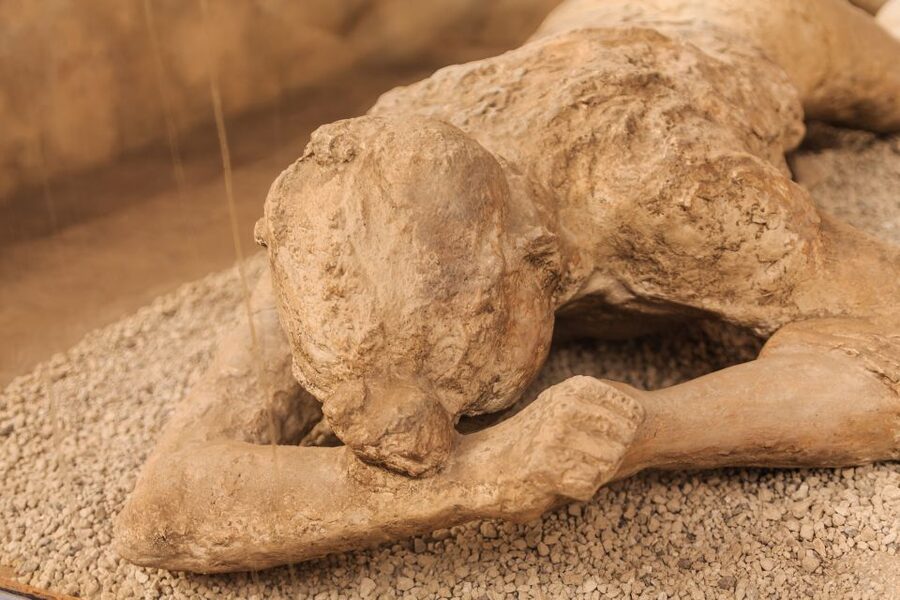
- Plaster casts of people and animals that translate 79 AD from history to something you can picture.
- Lupanar and baths for a clear look at private life and public leisure in one compact loop.
- Major houses and theatres in a walk that connects art, wealth, and entertainment.
- A bakery stop where you can still see surviving utensils and food remains.
Pompeii in 2 Hours, With an Archaeologist Explaining What You See
Pompeii can feel overwhelming fast. Streets twist, buildings look similar, and it’s easy to miss what you’re standing in front of. This tour fixes that with a tight structure: a guided walk through the most important western sites, with an archaeologist-style lens on how the city functioned.
What makes it especially engaging is the way the guide ties the ruins to the moment they were trapped. You get the big event, Vesuvius burying the city under molten ash and lava in 79 AD, and then you get the practical details of daily life, public buildings, and private spaces. The tone matters here. The tour frames the discovery and preservation as a way to understand real people, including the victims.
I like that it isn’t just “look at columns.” You also learn why Pompeii and Herculaneum were recognized by UNESCO for giving a complete and vivid picture of society and daily life at a specific point in the past. That kind of context helps you stop treating Pompeii like a random collection of walls.
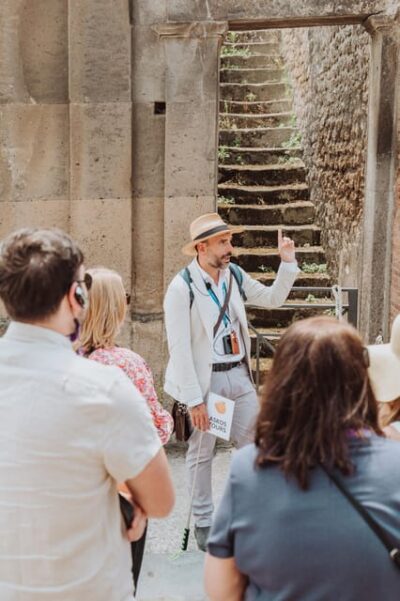
And yes, the guides can be excellent. The overall rating is 4.9 across 151 reviews, and the praise is consistent: guides like Rosalina, Tonia, Enzo, Paola, and others are described as animated, accurate, and good at keeping pace in a short visit.
Meeting at Porta Marina Superiore, and Getting Oriented Quickly
You meet your guide near Porta Marina Superiore. The exact meeting point can vary depending on your booking option, but the tour info gives a clear example: Pompei, Porta Marina, Via Villa dei Misteri 2. Your tour then walks into the western part of Pompeii, where the focus stays on public buildings, homes, and shops.
This matters because Pompeii’s entrances and ticket areas can feel confusing, especially if you arrive a bit early and then waste time figuring out where to line up. A good guide helps you get bearings fast: where the main sights are, how the route will move, and what you should watch for at each stop.
One practical tip from real experience: the meeting location may not be obvious in GPS. If you’re navigating by phone, plan a little extra time and use a map app plus offline directions, then aim to arrive before your start window.
You also get disposable earphones for bigger groups. Even on a private group format, that’s useful if you’re in a busier corridor where the guide needs to project.
You can also read our reviews of more guided tours in Pompei Campania

Step Into Western Pompeii: The Walk That Shapes How You Read the Ruins
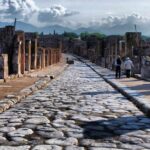
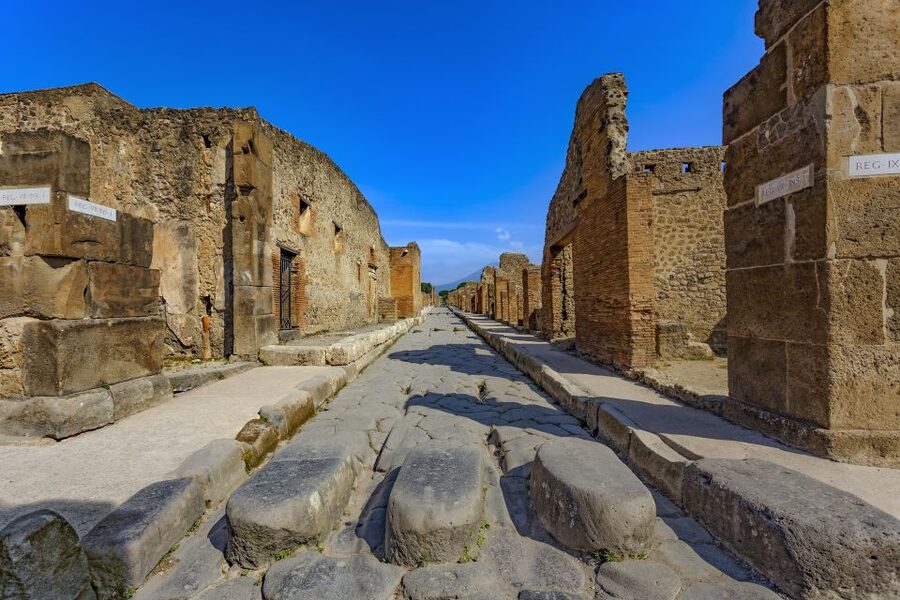
Once you’re inside, the tour stays structured. It moves through the western section where you can see the city’s main public buildings and also step into key domestic areas. The goal is that by the time you reach the Forum zone, you already understand the street-level logic: where commerce sat, where people gathered, and how neighborhoods connected.
As you walk, you’ll be encouraged to think like a Roman citizen. That’s more than a clever line. It changes how you notice details like entrances, layouts, and the relationship between indoor and outdoor spaces. Even a short visit benefits from that mindset because Pompeii isn’t just scenic. It’s architectural evidence.
You also learn why Pompeii is so unusually intact. Whole structures were preserved by the ash and rapid burial, which allowed later rediscovery in the 18th century. That historical arc is important because it explains why you’re looking at buildings that feel strangely readable, compared to other ancient sites.
And because the tour is only two hours, you’ll cover a broad set of highlights without getting lost in side alleys. That compact route is one of the best parts of a guided format here.
Temple of Apollo and the Big Public Picture Behind the Streets
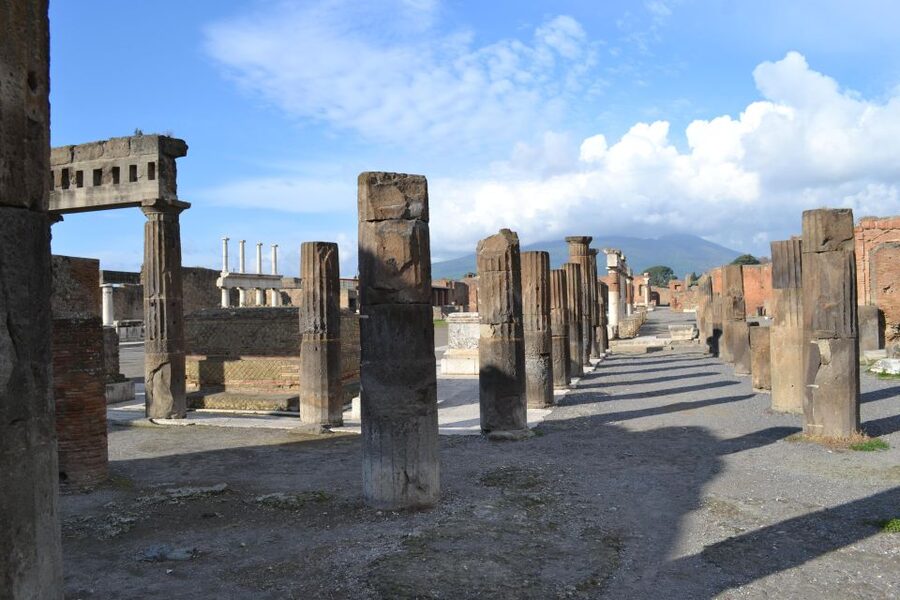
One of the first major stops is the Temple of Apollo. This kind of landmark helps you understand Pompeii as a city with religious and civic identity, not just a place where people lived and worked.
A guide’s job at a site like this is to translate scale and purpose. You’re not expected to memorize dates and names. Instead, you learn what the temple represented in the Roman world and how it fit into everyday rhythms of public life.
The value here is that you start building mental connections early. If you know what a big public structure signals, then later stops like courts, theatres, and baths feel linked rather than random.
Forum and Basilica: How Politics and Justice Worked in Daily Life
The heart of the tour is the Forum area and the Basilica, often described as the court house. This is where you’ll spend time shaping your understanding of how the city ran.
The Forum was the center of political and social life during the Roman Empire. In practical terms, it’s where people gathered, heard news, managed civic business, and stood in the flow of public conversation. When you see it with commentary, you start imagining the sound of the crowd and the movement between buildings.
Then comes the Basilica, a major civic structure tied to law and public administration. It’s the kind of building where your first reaction might be, I see an impressive room. With a guide, your second reaction becomes, I understand why someone would need to meet here.
If you like architecture but also care about real human systems, this stop combination is a win. It’s not just pretty ruins. It explains how authority, community, and public space overlapped.
Houses Like the House of Menander and the House of the Faun
You also step away from the public core into elite domestic spaces. The tour includes the House of Menander, plus the House of the Faun.
These houses help you see status and taste. Pompeii’s wealthier homes often show more than comfort. They show identity, investment, and artistic priorities. That’s why these stops are worth time, even in a short tour.
A guide’s storytelling makes it easier to spot what matters: where daily life probably unfolded, how rooms connected, and what the layout suggests about privacy and hospitality. You don’t need to be a Roman architecture expert to feel the difference once you understand what type of house you’re looking at.
The best part of including homes is balance. Without them, Pompeii can skew toward public monuments only. With them, you get a more complete picture of city life, from meetings in the Forum to private living spaces behind walls.
More Naples tours, ruins, coast days, and city experiences to compare
Forum Baths and the Lupanar: Public Relaxation and Private Risk
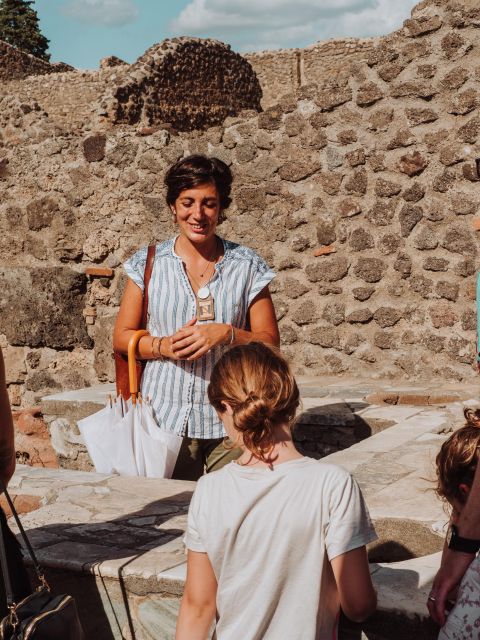
Two stops that add real contrast are Forum Baths and the Lupanar (the old brothel).
The Forum Baths help you understand daily leisure and routine. Baths in Roman cities were social spaces as much as they were hygiene spaces. When you learn this from a guide, you start to appreciate the design logic: how people moved through areas, how the building functioned, and why it mattered that it was public.
Then the Lupanar shifts the tone. It’s an uncomfortable subject, but the tour treats it as part of historical life, not scandal for its own sake. You learn how commercial sex worked in the ancient city and what the building reveals about how Pompeii managed private desires within a public setting.
This is one of the tours’ strongest points: it doesn’t sanitize Pompeii into only grand temples and heroic art. It includes the real texture of human behavior.
Large Theatre, Amphitheatre, and House of Vettii: Entertainment for Different Crowds
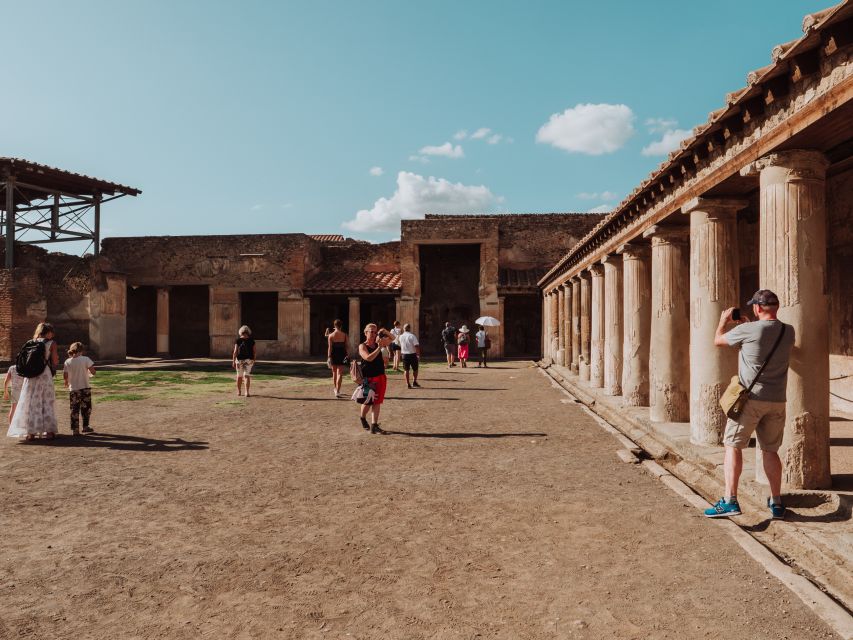
The tour covers major performance and crowd spaces, including the Large Theatre and the Amphitheatre of Pompeii. These are also good stops for understanding how Pompeii organized entertainment.
A theatre setting suggests an audience experience built around spoken performance and public events, while the amphitheatre points toward large crowd spectacle. You’ll likely be guided to notice how these venues fit into the city’s layout, and what their scale implies about who would attend and why.
The tour also includes House of the Vettii, another important domestic site. Pairing major homes with performance spaces gives you a quick snapshot of two worlds: the private sphere of household wealth and the public sphere of mass entertainment.
Bakery Stop, Plaster Casts, and the Details That Make 79 AD Feel Real
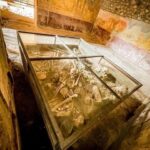
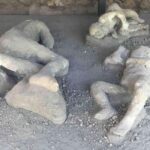
This is where the tour gets emotionally heavy in a careful, educational way. You’ll see plaster casts of humans and animals at the moment of their death. Seeing the casts with context changes the experience. It stops being a story about a city, and becomes a story about individuals.
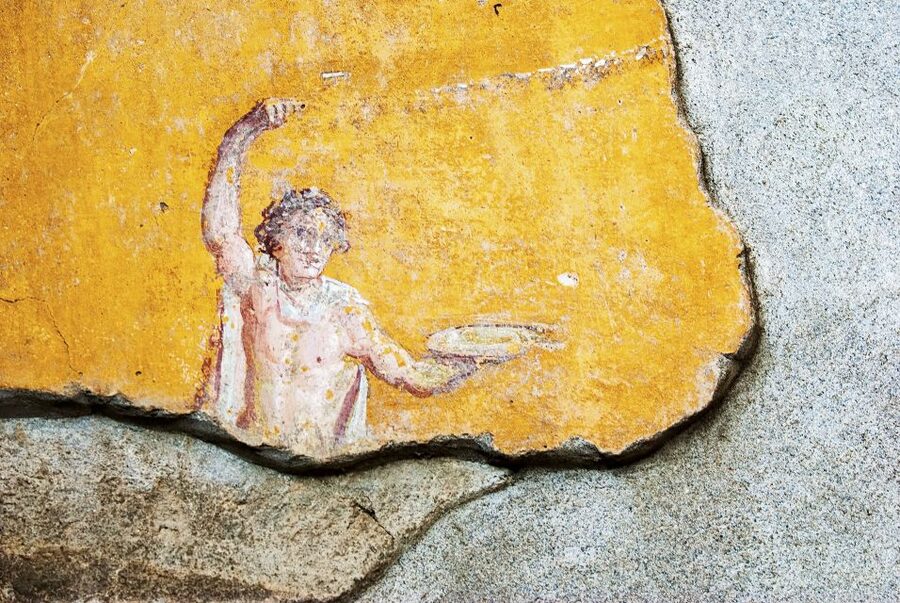
In the middle of that, you’ll also go to a bakery where you can still see surviving remains of utensils, and even food. That’s the rare kind of detail that makes Pompeii practical. It bridges the gap between disaster and daily routine.
If you’re the type of person who needs the past to connect to real life objects, this bakery moment is a big reason to choose a guided experience. Without help, it’s easy to walk past “stuff” in the ruins. With help, you notice what the objects tell you about cooking and work.
Guides often handle these moments with respect. In reviews, people repeatedly mention the careful tone around the tragedy, and how that respect adds to the learning instead of distracting from it.
Termopolium Capuano and the Art of Pompeii’s Everyday Commerce
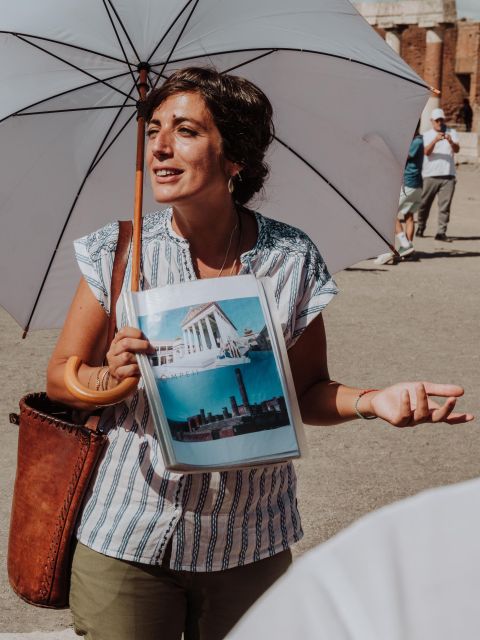
Pompeii wasn’t only homes and temples. The highlights include Termopolium Capuano, which is essentially an ancient snack bar. These places matter because they show how food and street life were tied together.
With a guide, the value is that you connect commerce with location. You can start to picture quick stops, casual meals, and how people kept moving through the day. Pompeii’s shops and public edges are part of how the city stayed alive.
Also included in the broader highlight set are major named houses like the House of the Faun and House of the Tragic Poet. Even if you only catch a few visual anchors in a two-hour walk, a guide helps you understand why these specific examples are frequently referenced when people talk about Pompeii’s interior art.
Finishing Near Villa Dei Misteri, Then Choosing Your Next Step
The tour ends at Pompei Scavi – Villa Dei Misteri. That’s a useful finish point because you’re still in the Pompeii archaeological zone. You can decide whether you want to keep exploring independently after the guided portion, or simply take a breather, hydrate, and let what you learned settle.
For your planning, keep expectations realistic. Two hours won’t cover everything. You’re getting a curated loop through the most important public buildings and standout private spaces, with archaeologist interpretation that makes the city easier to understand.
If you want to move smoothly, plan your rest of the day around walking. Pompeii is uneven and made for good shoes. Bring water and give yourself a little breathing room so the tour doesn’t turn into a race.
Price and Value: Is $175.74 Worth It for a 2-Hour Private Tour?
At $175.74 per person, this is not a budget add-on. The honest question is: what do you gain for the price?
Here’s the value logic I’d use. First, you’re paying for a guided interpretation of high-impact sites. Pompeii rewards understanding. Without it, you might enjoy the scenery, but the time can feel less satisfying. With it, you can walk away knowing why each building matters.
Second, the private group format changes the pacing. You’re not stuck in a “march and repeat” pattern. That matters because Pompeii is complex, and a good guide can explain without losing you in crowds.
Third, the tour includes Pompeii entry tickets and disposable earphones for bigger groups. That reduces friction. You’re not juggling ticket lines while trying to meet a guide.
Fourth, the reviews signal a consistent quality bar. The named guides praised in feedback include Rosalina, Tonia, Enzo, Paola, Alessandro, Giancarlo, Sergio, and Felicia. People repeatedly mention that the guide’s pace and storytelling make the two hours feel full.
Is it worth it? If you’re the kind of traveler who wants meaning and not just photos, yes. If you’re happy wandering ruins on your own and you already know your Roman civic buildings, you might get similar satisfaction with self-guided exploration. But for most people, an archaeologist-led, tight route is the smart way to get the most out of a limited time window.
Who This Pompeii Tour Suits Best
This tour fits you best if you want:
- A 2-hour visit that focuses on the essentials without feeling like a checklist.
- Clear explanations of the Forum, courts, baths, and major homes.
- The emotional and educational experience of plaster casts and a closer look at daily objects like those from a bakery.
- A guide who can keep pace while answering questions, which is what the high praise in the feedback points to.
It’s also a good match if your visit date might include heavy crowds. One of the practical benefits of a guide is the ability to choose better routes and keep the walk manageable.
One note to factor in: the tour info lists wheelchair accessibility, but the additional info says not suitable for wheelchair users. If mobility is a concern, confirm with the provider before you book so you don’t get surprised at the gate.
Also, bring comfortable shoes, sunglasses, sun hat, and water. Pompeii can be hot, and the walking time is real even when the tour feels structured.
Should You Book This Pompeii Archaeologist Tour?
Yes, if you want a Pompeii visit that feels organized, meaningful, and respectful. This is a strong choice for short time windows because you hit the Forum core, key homes, baths, the Lupanar, major entertainment venues, and the plaster casts that make the 79 AD story unavoidable in the best way.
Skip it only if you have lots of time and you prefer to read ruins at your own pace without a guide. Pompeii rewards curiosity, but it also rewards context, and this tour is built for context.
If your main goal is to understand how a Roman city worked, you’ll likely feel you paid for answers, not just access.
FAQ
How long is the Pompeii guided tour with an archaeologist?
The tour lasts 2 hours.
Where does the tour start and where does it end?
You meet near Porta Marina Superiore. One listed starting option is Pompei, Porta Marina, Via Villa dei Misteri 2. The tour ends at Pompei Scavi – Villa Dei Misteri.
What is included in the price?
It includes a guide, Pompeii entry tickets, and disposable earphones for bigger groups.
What should I bring?
Wear comfortable shoes and bring sunglasses, a sun hat, and water.
Are there any days when entry is free?
On the first Sunday of each month, entrance is free of charge, but tickets cannot be reserved ahead of time, so entry is not guaranteed.
What languages are available, and is it wheelchair accessible?
The live tour guide is available in French, German, Spanish, Italian, and English. The info also lists wheelchair accessible, but the additional notes say not suitable for wheelchair users, so it’s worth confirming accessibility with the provider before you go.
More Guided Tours in Pompei Campania
More Tours in Pompei Campania


More Tour Reviews in Pompei Campania

Not for you? Here's more nearby things to do in Pompei Campania we have reviewed






Tour Reviews, compared.
 ★ 4.8Pompeii: Entry Ticket and Guided Tour with an ArchaeologistFrom $3519,459 reviews
 ★ 4.2Pompeii: Entry Ticket with Optional Audio GuideFrom $2612,360 reviews
 ★ 4.8Pompeii: Small Group Tour with an ArchaeologistFrom $4012,264 reviews
 ★ 4.3Pompeii Ruins & Mount Vesuvius Day TourFrom $12011,459 reviews
 ★ 4.6Sorrento, Positano and Amalfi Full-Day TourFrom $10710,988 reviews
 ★ 5.0Sorrento, Positano & Amalfi Coast – Small Group TourFrom $768,643 reviews
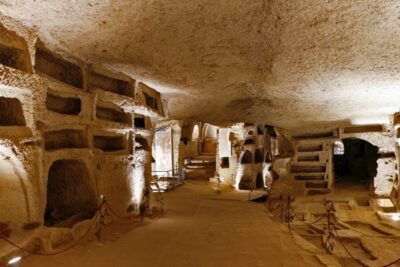 ★ 4.6Catacombs of San Gennaro Entry Ticket & Guided TourFrom $157,941 reviews
★ 5.0Pompeii Small Group Tour with an ArchaeologistFrom $356,593 reviews
★ 4.6Catacombs of San Gennaro Entry Ticket & Guided TourFrom $157,941 reviews
★ 5.0Pompeii Small Group Tour with an ArchaeologistFrom $356,593 reviews
Browse the lists this tour appears in