
Tour review · TOUR REVIEWS
2 Hours Private Tour of Pompeii for Journey Through Time
An eruption once erased a whole city, and Pompeii still feels alive. This 2-hour private tour is built for momentum, hitting three major stops without turning your day into a marathon. I like that you get an expert guide’s full attention, and I also like the route focus on daily life, not just big monuments. One consideration: the Amphitheatre ticket is not included, so plan for the extra entry fee for that stop.
In the field, you’ll walk in the footsteps of Romans and hear the story tied to Mount Vesuvius and the AD79 tragedy. I especially enjoy how the tour connects big drama at the amphitheatre to real street-level life on Via dell’Abbondanza, then closes with the practical Roman routine at the Stabian Baths. It is a short window, so if you want to linger for photos at every corner, you may feel a bit rushed.
Quick Hits: What Makes This Pompeii Private Tour Special
- Private guide time with a tight, well-paced 2-hour route
- Three standout Pompeii stops: Amphitheatre, Via dell’Abbondanza, and Stabian Baths
- A street that shows social mix, from homes and shops to shrines and public buildings
- Baths that make Roman daily life click, walking through cold, warm, and hot rooms
- Pre-tour communication and local help often praised, with guides Annarosa and Carla mentioned in feedback
Pompeii in Two Hours: How This Route Keeps It Understandable
Pompeii can feel overwhelming fast. Streets split, crowds thicken, and it is easy to get lost in “cool rocks” mode. This private tour solves that by using a short route that aims for comprehension, not just box-checking.
You start at Piazza Immacolata, 2, 80045 Pompei NA, Italy and finish at the Ruins of Pompei, Via Villa dei Misteri, 2, 80045 Pompei NA, Italy. That matters because you are not dragging your day across the site trying to reconnect pieces. In two hours, you can still get the emotional arc: public entertainment, everyday commerce and homes, then the ritual of bathing that structured daily Roman life.
For you, the private format is the big advantage. You are not forced to follow a generic group tempo. Your guide can explain why certain details matter, point out what to notice, and adjust pacing depending on what catches your interest. If you care about “why” as much as “what,” this style fits well.
One more value point: the tour is offered in English, and it is designed so most travelers can participate. That means you can spend your energy looking at Pompeii instead of translating everything on your own.
You can also read our reviews of more private tours in Pompeii

Entering the Amphitheatre of Pompeii: Gladiators, Crowd Energy, and One Ticket Catch
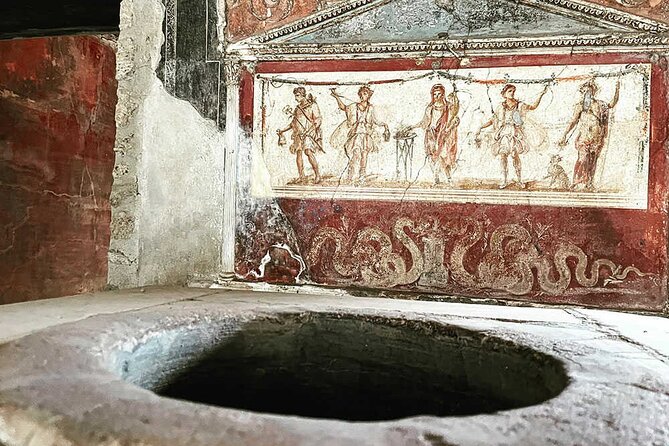
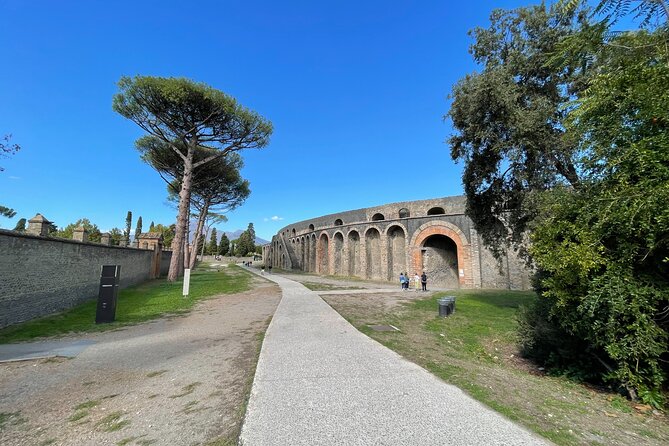
Your first stop is the Anfiteatro Romano (Amphitheatre of Pompeii), scheduled for about 30 minutes. This is one of the oldest surviving Roman amphitheatres, and it sets the tone for the whole visit. Even if gladiators are not your personal obsession, the building teaches you how Romans created spectacle.
Here’s what makes this stop interesting. The amphitheatre is not just an old stadium shape. It is a place where contests, crowds, and messaging worked together. Your guide will connect the experience to what you already know today, describing gladiator contests and the kind of slogans and nicknames you would associate with modern sports posters and celebrity hype. The point is not to say it is the same as now. The point is to help your brain picture the atmosphere.
What to watch for: focus on how the space funnels people and attention. The architecture helps you understand why crowds stayed loud and focused. When your guide highlights that, the ruins start to feel like a living stage instead of a shell.
Practical note that affects value: admission for this stop is not included. The site entrance fee is listed as €18.00 per person (and the amphitheatre’s ticket is the one you need to budget separately). If you are comparing options, you should factor that in before you decide based on the tour price alone.
Via dell’Abbondanza: The Main Street That Shows Who Lived Here
Next comes Via dell’Abbondanza, about 45 minutes, and this is where Pompeii shifts from performance to daily life.
This street is described as a single corridor that carried houses, apartments, businesses, and workspaces from all social levels. It also included grand public buildings and shrines. That mix is the whole payoff. You do not get a “rich people quarter” or a “temple zone” only. You see how Pompeii worked as a real city, with regular economic activity running right alongside religious and public life.
For you, this is one of the most useful parts of any Pompeii visit. It is easy to memorize big names like Forum or Temple of Apollo from guidebooks. It is harder, and more meaningful, to picture what it felt like to walk a street where someone’s shop is next to a doorway that might open into a home. This route helps your brain connect the layout to actual routines: buying, eating, working, worshipping, and moving through the city.
What your guide can do well here is show you the contrasts. Even within one street, the meaning changes from block to block. If you enjoy human-scale history, this is where you will likely feel the emotional connection to Pompeii most strongly.
Tip for your comfort: since this segment is street-based, you will likely do more standing and looking around in place than at the baths. Wear shoes you trust and stay ready for the kind of “stop, look, walk a bit” rhythm that keeps a short tour engaging.
Stabian Baths (Terme Stabiane): A Smart Ending That Explains Roman Routine
Your final major stop is the Stabian Baths, scheduled for about 45 minutes. These are among the oldest Roman baths known, dating back to the 2nd century BC, and that age is part of the storytelling power. Instead of only staring at decorations, you get a framework for how bathing worked as a routine.
The tour includes walking through key rooms:
- the apodyterium (dressing room)
- the frigidarium (cold baths)
- the tepidarium (medium temperature baths)
- the caldarium (hot baths)
This sequence is more than a list. It helps you understand the logic of Roman leisure and hygiene. Cold to warm to hot is a body path, but it is also a social one. If you picture people arriving, changing, then moving through temperature stages with time and conversation, the ruins stop being static.
What I like about ending here is that it grounds the Pompeii story. The amphitheatre gives you spectacle. Via dell’Abbondanza gives you commerce and community. The baths give you a daily rhythm that feels familiar because you can imagine modern people heading to a spa or a gym, even though the setting is totally different.
Ticket included for this portion, which improves overall value: the tour lists admission as included for the Via dell’Abbondanza and included for the Stabian Baths segments.
The Private Guide Factor: What You Gain Beyond a Checklist
A private tour is not automatically better. But this one has a clear advantage: you’re with one guide for the whole experience, so there is time to explain and connect details instead of only pointing.
The feedback highlights strong communication and local know-how. Guides Annarosa and Carla are specifically mentioned in praise for communication beforehand and for sharing recommendations beyond the tour itself. That kind of add-on can matter when your Pompeii visit sits inside a larger Italy plan. Even a few good suggestions for where to go after, how to time your next stop, or what to look for nearby can save you from random choices.
What you should expect in a good private guiding style is that your guide does not treat Pompeii as a script. They focus on what helps you picture Roman life quickly: how entertainment worked, how streets functioned, and how baths shaped daily habits. In a two-hour format, that is the difference between “seeing” and “understanding.”
If you are traveling with kids, a private guide can also help keep attention. Pompeii is long and uneven, so a guide who can turn stone into a story helps.
More Naples tours, ruins, coast days, and city experiences to compare



Timing, Pacing, and Where You’ll Stand Most
The tour runs about 2 hours. Each stop has a set window: roughly 30 minutes at the amphitheatre, 45 minutes on Via dell’Abbondanza, and 45 minutes at the Stabian Baths.
Here’s how that affects you. You get enough time to learn the main idea at each stop. You do not get enough time to slowly explore every side corridor, shop, or room on your own. This is intentional. It is the kind of itinerary built for first-time Pompeii visitors who want a guided spine and a clear sense of what they are looking at.
The meeting point is Piazza Immacolata, 2, and you end at the Ruins of Pompei near Via Villa dei Misteri, 2. In practice, ending near a different point can be helpful if you plan a follow-on activity in the area. The big win is that you are not forced to walk back over the same ground just to reach your next plan.
Also, the tour notes it is near public transportation, which you will care about if you are planning day trips around Naples or staying nearby.
Price and Value: $216.27 Per Group, Plus One Important Fee
The price is $216.27 per group, up to 8 people, for a private English guide for about 2 hours.
How I think about value here:
- If you are a couple or small group, private guiding is usually pricier than a group tour. But in return you get full attention and a more efficient route for a short visit.
- If you have up to four or more people, this price format can feel more reasonable because you are spreading the group cost across seats.
- The tour’s focus is tight: it targets three high-impact stops that build an overall picture fast.
Now the catch: entrance fees are not fully included. The site entrance ticket is listed as €18.00 per person. The tour notes admission is not included for the amphitheatre, while admission is included for Via dell’Abbondanza and the Stabian Baths. That means your final cost will depend on who you are with and whether you have to add that amphitheatre ticket portion.
If you are comparing, do not just look at the tour price number. Compare the all-in cost after factoring the €18.00 per person entrance fee.
Who This Pompeii Tour Fits Best
This tour is a strong fit if:
- you want the essentials of Pompeii without spending a full day alone with a map
- you prefer guided explanation over self-guided wandering
- you care about how people lived, not only the most famous monuments
- you travel in an English-speaking group and want smooth communication
- you value private pacing, especially if your group includes different comfort levels with walking
It may be less ideal if:
- you want to linger for long photo stops and slow exploration at every single area
- you plan to cover the entire Pompeii site in one go
- you are budgeting extremely tightly and do not want to add entrance fees
Should You Book This Private Pompeii Tour?
Book it if you want a focused Pompeii visit that helps you make sense of what you see in about two hours. The route choice is practical: the amphitheatre gives spectacle, Via dell’Abbondanza shows daily city life, and the Stabian Baths explain a routine that makes Pompeii feel human.
I would especially consider it if you like having a guide who communicates well beforehand and also helps you connect your Pompeii stop to the rest of your trip. With the kind of praise tied to Annarosa and Carla for communication and local recommendations, you are not just paying for narration. You are buying a smoother, more confident visit.
If you decide, do budget for the site entrance fee (€18.00 per person) and arrive ready to walk and look. With that sorted, this is an efficient, high-impact way to experience Pompeii without turning it into a grind.
FAQ
How long is the Pompeii private tour?
The tour lasts about 2 hours.
What is the meeting point and end point?
It starts at Piazza Immacolata, 2, 80045 Pompei NA, Italy and ends at Ruins of Pompei, Via Villa dei Misteri, 2, 80045 Pompei NA, Italy.
What is the price and group size?
It costs $216.27 per group for up to 8 people.
Is the tour private?
Yes. It is a private tour/activity, and only your group participates.
What language is the tour offered in?
The tour is offered in English.
What is included in the price?
The private guide is included.
Is the entrance fee included?
No. Entrance fee to the archaeological site is €18.00 per person. Admission is not included for the Amphitheatre stop, while admission is included for Via dell’Abbondanza and the Stabian Baths.
Where do the tour stops go?
You visit the Roman Amphitheatre, Via dell’Abbondanza, and the Stabian Baths (Terme Stabiane).
Is confirmation provided after booking?
Yes. Confirmation is received at the time of booking.
What is the cancellation policy?
You can cancel for a full refund up to 24 hours in advance. Canceling less than 24 hours before start time does not get a refund.
More Private Tours in Pompeii



More Tours in Pompeii



More Tour Reviews in Pompeii

Not for you? Here's more nearby things to do in Pompeii we have reviewed






Tour Reviews, compared.
 ★ 4.8Pompeii: Entry Ticket and Guided Tour with an ArchaeologistFrom $3519,459 reviews
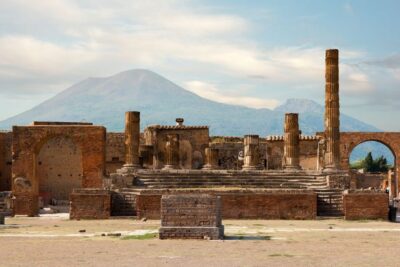 ★ 4.2Pompeii: Entry Ticket with Optional Audio GuideFrom $2612,360 reviews
 ★ 4.8Pompeii: Small Group Tour with an ArchaeologistFrom $4012,264 reviews
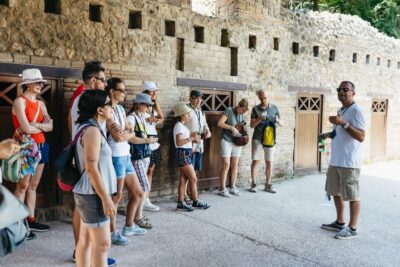 ★ 4.3Pompeii Ruins & Mount Vesuvius Day TourFrom $12011,459 reviews
 ★ 4.6Sorrento, Positano and Amalfi Full-Day TourFrom $10710,988 reviews
 ★ 5.0Sorrento, Positano & Amalfi Coast – Small Group TourFrom $768,643 reviews
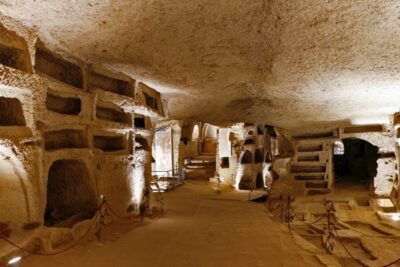 ★ 4.6Catacombs of San Gennaro Entry Ticket & Guided TourFrom $157,941 reviews
★ 5.0Pompeii Small Group Tour with an ArchaeologistFrom $356,593 reviews
★ 4.6Catacombs of San Gennaro Entry Ticket & Guided TourFrom $157,941 reviews
★ 5.0Pompeii Small Group Tour with an ArchaeologistFrom $356,593 reviews
Browse the lists this tour appears in