
Tour review · TOUR REVIEWS
2 Hours Pompeii Group Tour with Archaeologist Guide and Skip the Line
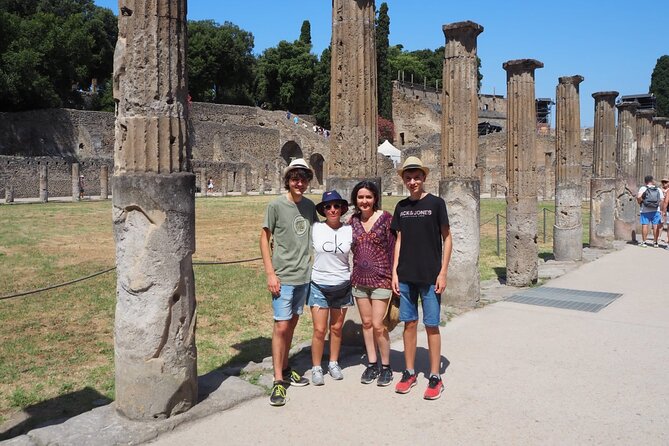
Pompeii comes at you fast. This tight 2-hour visit is a smart way to see the big sights with archaeologist-led storytelling, plus skip-the-line help for ticket pickup. My favorite part is how the route turns scattered ruins into a day-in-the-life picture, but the tradeoff is time. With only two hours, you will move quickly and you will still want a return visit for deeper wandering.
The guides named in recent feedback, including archaeologist Eliana Sandretti and guides such as Mariagrazia, Luciana, and Luisa, get praised for bringing daily life into focus. If you like asking questions, a small group matters, because you are not just herded along. One possible drawback to keep in mind: Pompeii can be crowded, and skip-the-line only covers the ticket office, not the crowds inside the site.
You meet at Ristorante Suisse in Piazza Esedra (10/13) and you stay on a planned loop, ending back at the same spot. The tour runs in English, uses a mobile ticket, and is set up for good weather.
Key highlights to know before you go
- Skip-the-line ticket pickup for entering Pompeii
- Archaeologist guide and assistance for the full tour
- Max 15 people for a more focused experience
- Main Pompeii sights in one loop, from theaters to baths
- English language tour with a mobile ticket format
Price and Skip-the-Line: What You Pay, What You Still Need to Budget
This tour is priced at $132.03 per person for about 2 hours, and it includes the big value pieces: an authorized guide, a guided route through Pompeii’s main attractions, and skip-the-line help for buying tickets on site. The skip-the-line part is specific. It helps you avoid the long wait at the ticket office, so you can get moving faster once you arrive.
One key cost detail: the Pompeii entrance ticket is not included. The site ticket is 18 euros per adult, and it is free for minors, as long as minors bring an identity card. That means your day has two budgets, the tour fee plus the entrance ticket.
So is it worth it? For me, the value comes from the time compression. Pompeii is huge. In a short visit, paying for a guide can be the difference between seeing a list of famous spots and understanding what you are looking at. Add the ticket-office skip, and you reduce the most annoying waiting moment.
Also, this tour gets booked far ahead on average, 173 days in advance. If you travel in peak season or on a busy day, grab your slot early so you do not end up scrambling for time.
You can also read our reviews of more guided tours in Pompeii

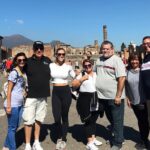
Meet at Ristorante Suisse in Piazza Esedra: The Simple Logistics That Matter
You start at Ristorante Suisse, Piazza Esedra (10/13), 80045 Pompei NA. That matters because Pompeii visits often fail at the first hurdle, finding the group and getting inside without stress. Here, your meeting point is a clear landmark at Piazza Esedra, and the tour ends back at the same meeting point.
A few practical notes from the tour details:
- The tour runs in English.
- You will use a mobile ticket.
- It is a group tour with a maximum of 15 people.
- Service animals are allowed.
- It is near public transportation.
The tour is also described as requiring good weather. If weather is poor, you should expect a reschedule or a full refund, since the experience depends on outdoor time.
Vicolo di Gladiatori and Fullonica di Stephanus: Training Ground Energy and Roman Laundry Work
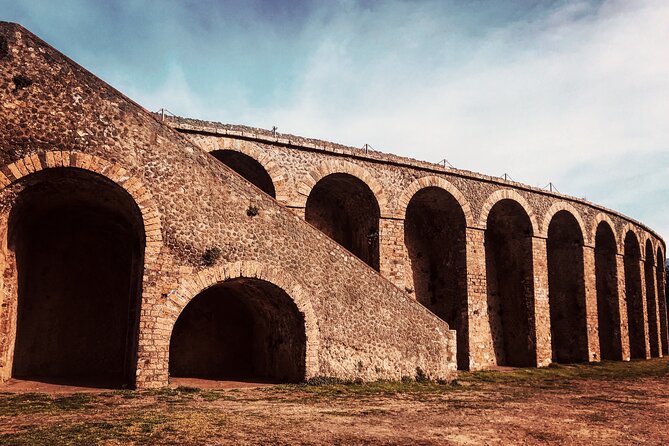
This route begins with two short, high-impact stops. Each one is built to hit a different side of Pompeii fast, gladiators and everyday labor.
Vicolo di Gladiatori (Gladiators’ Barracks)
You spend about 10 minutes here. This is one of the most evocative places in Pompeii because it connects you to people who trained and fought. Even though you are not inside a modern arena, the space helps you imagine the routine: practice, discipline, and the human drama behind those public spectacles.
Why it works in a 2-hour tour: you get emotion and atmosphere early, so the rest of the ruins feel less like random stones.
A possible drawback: because it is brief, you will not have long to wander. Go in with a watchful eye and let your guide point out the details worth pausing for.
Fullonica di Stephanus (Pompeii’s Laundry)
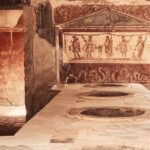
Another 10 minutes, and this one flips the mood. The Fullonica is described as the most famous laundry in Pompeii. It gives you a real-world Roman job picture: washing clothes, roughing fabrics, and the materials Romans used.
This stop is a favorite for people who like daily-life history. It is also a great contrast after the gladiators. One place is about public spectacle. This one is about work behind the scenes.
More Naples tours, ruins, coast days, and city experiences to compare
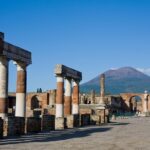

Temple of Jupiter and the Forum Area: How Religion and Commerce Sat Side by Side
Next comes the temple area where civic life mixed with religious practice.
Tempio di Giove Capitolino
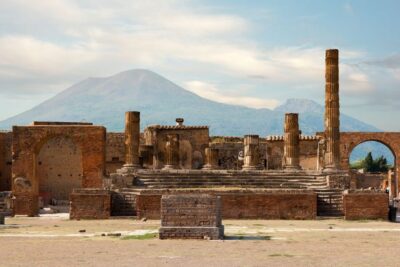
You get about 5 minutes here. The tour frames it as the temple of Pompeii where cult activities took place, located in the larger forum. In the morning, the Romans carried out both mercantile (trade) and cult (religious) activities there.
That pairing is one of the things I love about Pompeii. It is not only about buildings collapsing. It shows how Romans organized a day: buy, sell, pray, repeat.
Small consideration: the stop is short. If you want longer viewing time, you might add extra self-guided hours on your own. In a 2-hour group visit, you are getting orientation, not a slow museum pace.
Street full of shops and the city market moments
The route also includes walking through the main street of the archaeological site, described as full of shops. The purpose here is less about one exact wall and more about context. Pompeii was a working city, with shopping streets and resale commerce.
Later, you also see the city market, located near the large forum. The tour notes that it was tied to large purchases of goods that would then be resold in shops. That detail helps you connect the forum area to everyday economic life, not just ceremonial space.
Odeon and Teatro Grande: Music, Theatre, and Roman Entertainment at Speed
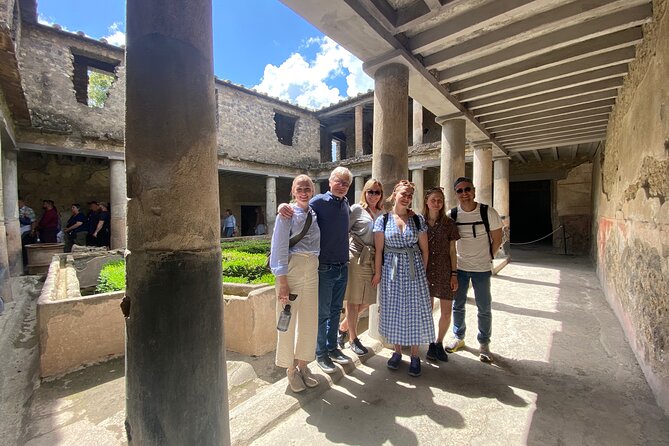
If you want proof that Pompeii was not quiet or empty, these theatre stops do it.
Odeon, Teatro Piccolo
This is about 15 minutes. The Odeon, also called Teatro Piccolo, is presented as a theatre for musical events. The tour adds an interesting detail: musical instruments were found inside the theatre, and you can find them in the Antiquarium.
That is exactly the kind of connection a good guide should make. You are not only seeing the theatre shape. You are learning what evidence survives, and where those finds ended up.
Teatro Grande
Then you move to Teatro Grande, about 10 minutes. This is the largest theatre in Pompeii, used for dramas and theatrical comedies. The route also notes it was totally renovated thanks to grants from the gens Holconia, one of the most important families of Pompeii.
What this adds: you see entertainment plus local power. If elite families funded renovations, then theatre was not just art. It was social influence in stone.
Casa del Menandro: Frescoes, Status, and the Luxurious Side of Pompeii Living
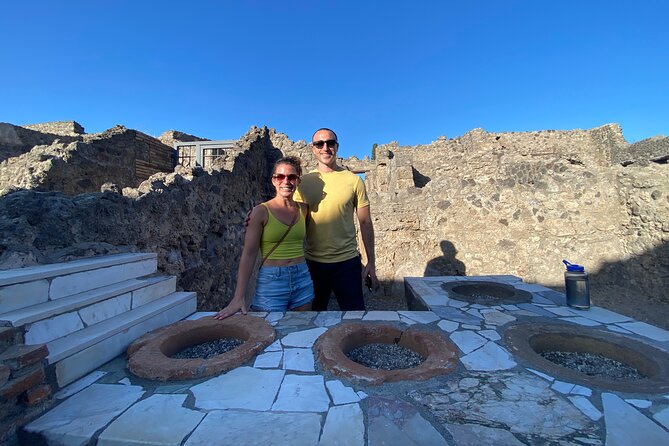
After public entertainment, you step into the private world.
Casa del Menandro
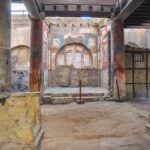
You spend about 15 minutes here. This is described as one of the Roman luxury houses, full of frescoes, decorations, and sculptures.
In a short tour, this is a high payoff moment because it changes your perspective from crowds and crowds of public architecture to personal space. It is also where guides often get best at turning surfaces into stories: what people valued, how rooms worked, and why these houses mattered.
A drawback to plan for: house interiors and fresco-heavy viewing can be visually intense. If you rush, you might miss the nuances. Still, even a quick look helps you realize Pompeii was a place where wealth lived next to poverty.
Lupanar and Temple of Venus: Sensitivity, Destruction, and the Human Messiness of History
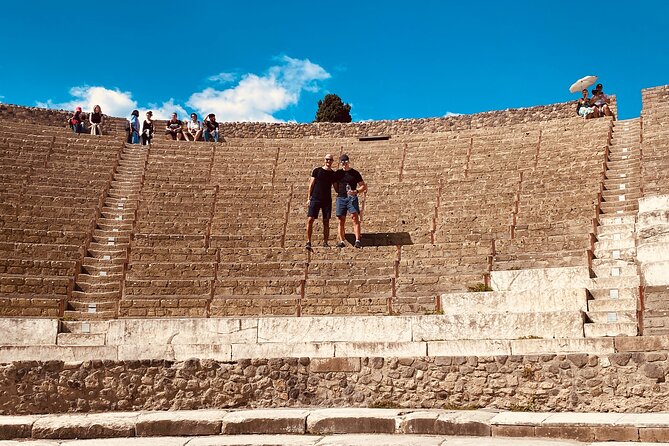
This part of the route is emotionally heavier, and the guide pacing matters.
Lupanar
You get about 15 minutes at the Lupanar, one of the most famous brothels in the world. The tour highlights that you can see original frescoes with scenes from the kamasutra.
This is the kind of stop that may not be comfortable for everyone. If you prefer light topics, keep that in mind. If you do choose to see it, treat it as social history, not shock value. Pompeii includes difficult facts of everyday life.
Practical note: you will likely want to keep expectations realistic here. Fresco survival means you may see fragments and wear, not perfect color and polish.
Temple of Venus (partly destroyed during World War II)
The tour also includes the Temple of Venus, noting it was partly destroyed during the Second World War. That detail matters because Pompeii did not only suffer from the eruption. Modern history shaped what is still visible today.
I like how this stop adds a second layer of time, ancient life and later loss. It also reminds you that preservation is an ongoing story, not a finished one.
Pompeii’s Basilica and the Main Shop Streets: Where Justice Meets the Marketplace
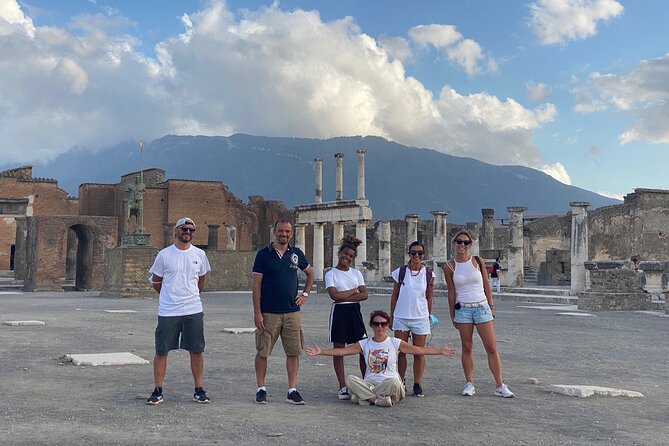
Next you shift from religion and luxury into civic order and city life.
Pompei La Basilica (Basilica near the main square)
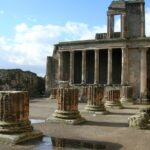
This stop runs about 15 minutes. The tour describes it as the place where justice was administered, located near the main square.
That is a powerful mental image. A place for decisions and disputes sits close to public movement and commerce. When you know this, Pompeii feels less like a ruin and more like a city with systems.
The shop streets and side street walking moments
The tour includes time walking a street described as full of shops, plus another street segment. Even if you are not stopping at every single doorway, these walking parts help you visualize routes people took: how they passed through the city, where daily business happened, and what the rhythm of movement might have looked like.
Stabian Baths and Pompeii 3D: Touching Daily Routines and Seeing Through Time
Now you get a very different kind of experience, physical space and then a short visual component.
Stabian Baths (Terme Stabiane)
You spend about 15 minutes at the Stabian Baths. The tour notes these are the first baths built in Pompeii, and they still show casts and frescoes.
Baths are a classic Pompeii theme, and for good reason. Even in a ruin, they show routine. The layout suggests social time, hygiene, and how Romans used public space for relaxing and talking.
A possible drawback: if you are visiting in warm weather, baths can feel like an extra sensory stop. The tour requires good weather overall, but that just means plan for heat, sun, and walking.
Pompeii 3D, Bodies of Pompeii
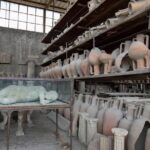
This is a brief 5 minutes stop, listed as Pompeii 3D, Bodies of Pompeii. It is short, so do not expect it to replace the real site. Think of it as a quick tool to help you visualize what your eyes cannot fully grasp from ruins alone.
Even a short stop can be useful, because it gives your brain a bridge between artifacts and human outcomes.
City Market and the Temple of Apollo: Finishing With a Forum-Focused Finale
The last stretch ties the route back to the large forum life that structured Pompeii.
City market near the large forum
The tour includes the city market near the large forum, described as a place where large purchases were made so goods could be resold in shops. I like this because it turns the forum into something practical. It is not only a ceremonial hub. It is also where commerce and distribution happened.
Temple of Apollo
You also visit the Temple of Apollo, described as one of the most popular in Pompeii. Apollo temples are often tied to civic identity, and in a fast route like this, it gives you a final named reference point. You finish with a sense of how the city organized belief, community, and public space.
The Guide Style That Makes a 2-Hour Tour Feel Like More
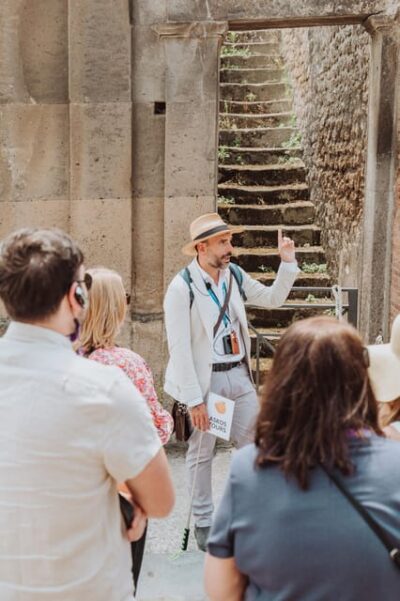
In a short Pompeii visit, the guide is the difference between seeing and understanding. The guides tied to this tour, including Eliana Sandretti and also named guides like Mariagrazia, Luciana, and Luisa, get strong praise for turning ruins into human scenes.
Here is what that means for you on the ground:
- You will get more than dates. You will get how a place likely functioned day to day, from laundry work at the Fullonica to civic purpose in the Basilica.
- You will have a guide to connect why one site follows another, so it does not feel like a random walk.
- You will have time for questions in a group capped at 15 people, which is ideal when you want clarity.
One more small advantage of the small group size: your guide can keep you together. Pompeii has plenty of tempting side paths. A focused route helps you stay oriented.
If you are the type who loves to linger for an hour at a single fresco, this may feel too fast. But if you want a guided overview that hits the essentials and helps you see patterns, the pacing is the point.
Who This Tour Is Best For
This works best for:
- First-timers who want main attractions without spending a full day planning.
- People who want an archaeologist-led perspective and a guided narrative.
- Families with kids who are old enough to follow a walking plan. Minors also get free entry to the site with the required identity card.
It might not be ideal for you if:
- You want to explore Pompeii at your own slow pace with no structure.
- You are sensitive to darker topics like the Lupanar stop, which is part of the route.
Also, because the tour lasts about 2 hours, it is a solid choice if Pompeii is one stop on a packed Italy itinerary. It helps you get the headline sights and still leave room for a later, more flexible return visit.
Should You Book This 2-Hour Pompeii Tour?
I would book it if you want a focused Pompeii hit with real guidance. The combination of skip-the-line ticket pickup, an archaeologist guide, and a small group max 15 gives you a good return on your time. You also get a route that mixes public life (theaters, forum area, Basilica), private life (Casa del Menandro), and daily routines (laundry and baths).
Before you decide, budget for the 18 euro site entrance ticket and remember minors need an identity card. And be honest about the time limit. Two hours is enough for an overview. It is not enough to master every alley, fresco, and inscription.
If that sounds like your style, this is a very practical way to see Pompeii without turning the day into a queue-and-guessing contest.
FAQ
Is the Pompeii entrance ticket included in the tour price?
No. The tour price does not include the entrance ticket. The Pompeii entrance ticket costs 18 euros per adult, and it is free for minors with an identity card.
Does the skip-the-line feature help with tickets on site?
Yes. The tour includes skip-the-line to purchase tickets on site, which helps you avoid the long queue at the ticket office.
How long is the Pompeii tour?
The tour lasts about 2 hours.
How many people are in the group?
This is a group tour with a maximum of 15 people.
Where is the meeting point?
You meet at Ristorante Suisse, Piazza Esedra, 10/13, 80045 Pompei NA, Italy. The tour ends back at the same meeting point.
What language is the tour in?
The tour is offered in English.
Do I need to bring a mobile ticket?
Yes. The tour includes a mobile ticket.
Is it suitable for minors?
Minors can enter for free with an identity card. The tour notes that most travelers can participate.
Are service animals allowed?
Yes. Service animals are allowed.
What happens if the weather is bad?
The experience requires good weather. If it is canceled due to poor weather, you will be offered a different date or a full refund. You can also cancel for a full refund up to 24 hours before the experience start time.
More Guided Tours in Pompeii



More Tours in Pompeii

More Tour Reviews in Pompeii
Not for you? Here's more nearby things to do in Pompeii we have reviewed



Tour Reviews, compared.
 ★ 4.8Pompeii: Entry Ticket and Guided Tour with an ArchaeologistFrom $3519,459 reviews
 ★ 4.2Pompeii: Entry Ticket with Optional Audio GuideFrom $2612,360 reviews
 ★ 4.8Pompeii: Small Group Tour with an ArchaeologistFrom $4012,264 reviews
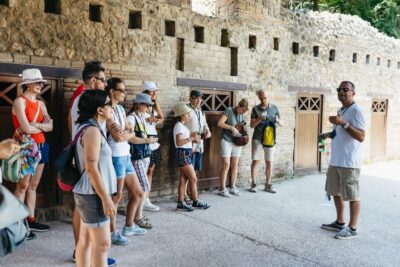 ★ 4.3Pompeii Ruins & Mount Vesuvius Day TourFrom $12011,459 reviews
 ★ 4.6Sorrento, Positano and Amalfi Full-Day TourFrom $10710,988 reviews
 ★ 5.0Sorrento, Positano & Amalfi Coast – Small Group TourFrom $768,643 reviews
 ★ 4.6Catacombs of San Gennaro Entry Ticket & Guided TourFrom $157,941 reviews
★ 5.0Pompeii Small Group Tour with an ArchaeologistFrom $356,593 reviews
★ 4.6Catacombs of San Gennaro Entry Ticket & Guided TourFrom $157,941 reviews
★ 5.0Pompeii Small Group Tour with an ArchaeologistFrom $356,593 reviews
Browse the lists this tour appears in