
Tour review · TOUR REVIEWS
Pompeii 2h Small-Group Tour with Expert Archaeologist
Pompeii, but you see it without wandering. This 2-hour small-group Pompeii tour is a smart way to hit the sites you would otherwise miss, and you get a guide who can explain what you’re looking at fast. I love that the route stacks major highlights like the Teatro Grande and the Forum, and that many guides handle families well, like Patrizia with energetic kids and Roberta who kept groups moving through crowds. The main drawback to plan around is that it is still a short visit, and if you want deep archaeology methods, you may wish you had more time (or more specialist focus) once you’re inside.
What makes this experience feel worth the money is the pacing and the selection. You’re not stuck in Pompeii for half a day, and you’re not trying to decode everything on your own while your brain melts in the heat. One more thing to consider: even though it’s capped at 30, a few situations can affect the intended small-group feel, so if you truly need quiet headsets or a very tight group, it’s worth mentally preparing for some variation.
If you’re curious, time-limited, and you want your Pompeii visit to feel organized, this is a strong option. You’ll walk away with a clear mental map of the city, not just a pile of photos.
Key takeaways before you go
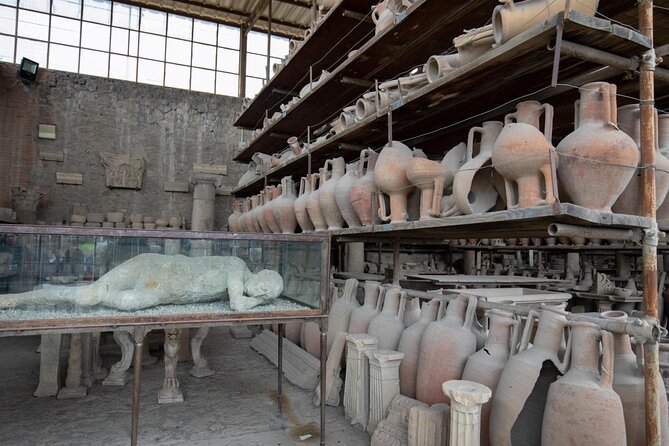
- Two hours, high-impact route that covers theaters, villas, baths, brothel remains, and the main public spaces
- Tickets included for each highlighted stop you enter during the tour
- Family-friendly in practice, with guides who have shown patience with kids (and a few reminders to match expectations for age and attention span)
- Shade and crowd awareness, with some guides actively adapting when conditions get hot
- Small-group cap, with a maximum of 30 people, and a realistic understanding that logistics can sometimes change the exact size
A 2-hour Pompeii route that respects your time and your feet
Pompeii is big, and it’s easy to lose the thread. A fast, guided route helps you keep your bearings, because the guide connects buildings to daily life. In just about two hours, you’ll get an organized sweep through the parts that most people remember most: performance spaces, elite homes, civic centers, and the bath and street scenes that reveal how Romans actually lived.
This tour is built for people who want the essentials without burning a full day. It’s also a good first stop on a longer trip in the Naples area. If you’re staying nearby and you want a payoff quickly, this format works.
One practical note: Pompeii involves walking on uneven ground, and the tour is listed for people with a moderate fitness level. In real life, that means comfortable shoes matter, and you should take breaks when your guide suggests them. The heat is not a rumor, and more than one guide has been praised for stopping in shaded areas while explaining the ruins.
More Naples tours, ruins, coast days, and city experiences to compare

Where you meet: Ristorante Suisse in Piazza Esedra
The meeting point is at Ristorante Suisse, Piazza Esedra, 10/13, 80045 Pompei NA, Italy. The tour ends back at the same place, so you don’t have to figure out a separate drop-off point later.
This area is also described as near public transportation, which is helpful if you’re arriving from Naples or using trains and buses. If you’re coordinating with others, it’s smart to arrive a little early so your group can settle and your guide can get everyone oriented before you head into the park.
Stop-by-stop: Pompeii highlights you actually remember
The schedule is tight, with each stop usually getting around 10 to 15 minutes. That can feel quick, but that’s the point. You’re trading slow wandering for an itinerary that hits the biggest visual and historical markers, so you go home with a mental checklist.
The Archaeological Park of Pompeii and frescoes that set the tone (Stop 1)
Your first stop is the Archaeological Park of Pompeii. The core idea here is orientation. You’ll learn what Pompeii is and why so much of the city survived, tied to the eruption of Mount Vesuvius in 79 AD.
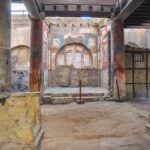
You’ll also spend time looking at frescoes and famous areas. Even if you’ve seen photos before, a guide can point out what you’re looking at, from wall art placement to what scenes might have meant in daily life. The big value of starting here is that it frames the rest of your route. Without that foundation, you can end up moving through buildings that look impressive but feel disconnected.
One drawback of a highlight-based first stop: you won’t see everything in depth. If you’re the kind of person who likes long reads or museum-style interpretation at every turn, you may feel the time squeeze. But if you want a strong introduction, this is a great start.
Odeon and Teatro Piccolo: a quick look at performance spaces (Stop 2)
Next you’ll visit the Odeon, also connected with the Teatro Piccolo. This is one of those spaces that makes Pompeii click as a city, not just a set of surviving walls.
The guide’s job here is to help you read the structure and understand why these rooms mattered to public life. Ten minutes isn’t a lot of time, but it’s enough to understand what the building is and why it belongs in the highlight list.
If you love theater and architecture, you might want to revisit on a self-guided walk after the tour. The beauty of a guided highlights route is that it tells you where to focus your second pass.

Teatro Grande: the most important theater (Stop 3)
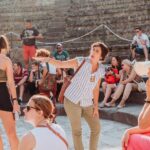
Then comes the Teatro Grande, described as the most important theater in Pompeii. This stop gets about 15 minutes.
In practical terms, this is where you’ll see the scale difference. A big public theater is a social magnet, and this is one of the places where Pompeii stops feeling like a ruin and starts feeling like a real city with crowds, schedules, and community events.
This is also a great moment to ask questions if you have them. People in real-life guided tours often bring up how Romans used performance spaces, and your guide can usually connect what you see to the broader city plan.
House of Menander: a wealthy home with lots of visible detail (Stop 4)
Now you move into a rich private residence, the House of Menander. This is one of the richest houses in Pompeii, especially when it comes to architecture, decoration, and what’s preserved inside.
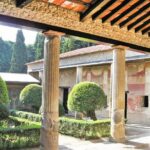
This stop is about contrast. After public spaces, you get a window into elite domestic life. Frescoes, decorative styles, and the way rooms relate to each other are the kind of details that are hard to interpret without someone guiding your attention. Even within 15 minutes, a good guide can make the house feel understandable, not just decorative.
The possible drawback is that houses can be emotionally moving in a way ruins are hard to fake. If you’re sensitive to how much was lost, you might want to pace yourself during this section rather than forcing the whole route to feel linear.
Stabian Baths: the oldest thermal complex (Stop 5)
Next are the Stabian Baths, also called Terme Stabiane. You’ll spend about 15 minutes in a vast thermal complex that’s described as the oldest in the city.
This is a powerful stop because it connects Pompeii to routines, not just monuments. A bathing complex tells you about social habits, health expectations, and daily schedules. Even though your time here is limited, the guide can help you recognize the bathing-room logic and why these spaces were such central parts of life.
If you’re traveling with kids, baths often land well because there’s a mix of spaces and the setting is visually engaging. Just remember: it’s still a walking tour, so keep an eye on comfort and shade.
Lupanar: Pompeii’s most famous brothel (Stop 6)
Then you’ll visit the Lupanar, described as the most famous brothel in the ruined Roman city of Pompeii. This stop is about 10 minutes.
This is the kind of site that hits a nerve, because it’s both specific and uncomfortable. A responsible guide can keep it factual and contextual. It can also be a good reminder that Pompeii’s everyday life included things modern visitors might prefer to ignore.
If you’re traveling with younger kids, you may want to think ahead about how your children handle adult-themed topics. The tour is marketed as family-friendly, and many guides have been praised for being patient with children, but one experience in the mix described inappropriate mocking. That doesn’t mean it’s the norm, but it is a reason to consider your family’s comfort level and to be ready to set expectations with your guide at the start.
Via dell’Abbondanza: a key street segment on the route (Stop 7)
You’ll also include Via dell’Abbondanza. The highlight here is the sense of moving through Pompeii like a pedestrian, not just hopping between set pieces.
Even without long explanations, walking a recognizable corridor helps you understand how people might have shifted from one kind of space to another. Think of this as a connective tissue stop, where the guide can help you feel the city’s flow.
House of the Faun: one of Pompeii’s largest private residences (Stop 8)
Then it’s the House of the Faun, one of the largest and most impressive private homes in Pompeii. You get about 10 minutes.
This stop is a high-contrast companion to the earlier house visit. Menander gives you a sense of elite detail and decoration; the House of the Faun reinforces scale, and helps you compare what wealth looked like across different residences.
If your goal is photography, these house interiors usually offer the most visually dense material in the tour. Just remember to leave enough time to look up, around, and not only at the floor.
Foro di Pompeya and the Basilica: the public heartbeat of the city (Stops 9 and 10)
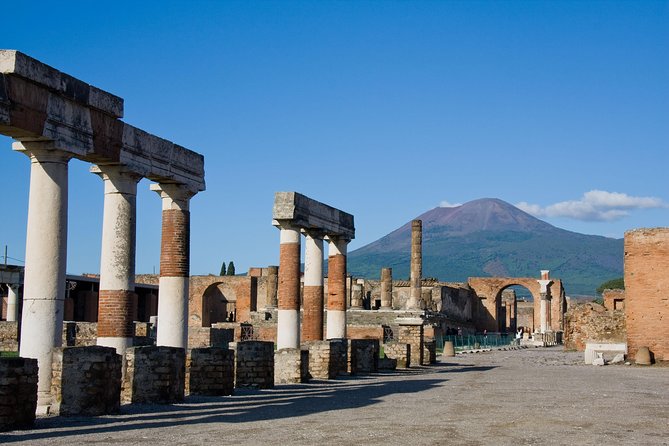
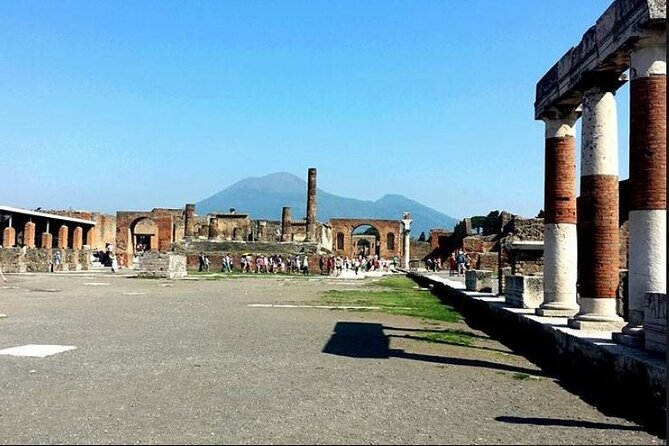
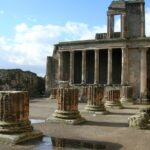
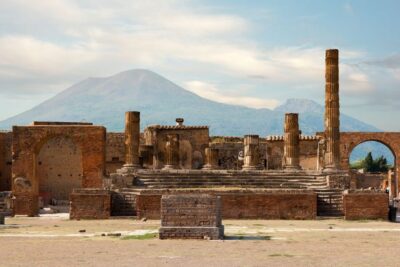
Finally, you’ll reach the main square, the Foro de Pompeya, then the Basilica. The square stop gets about 15 minutes, and the Basilica also gets about 15 minutes.
The Foro is where you see Pompeii as civic space, not just architecture. Then the Basilica, described as an open portico that sheltered merchants and other activities, adds the commercial angle. Together, these two stops help you understand the city as a system where people gathered, traded, and communicated.
By the time you reach this phase, you usually feel like Pompeii is no longer a puzzle. The guide’s job in the last stretch is to help you connect everything you’ve seen into a simple story: public life, private life, daily routines, and the street spaces linking it all.
A practical advantage of ending here: once you’re done with the tour, you’re oriented for wandering on your own. You’ll know what you’re looking at and why you might want to circle back.
Guides who make or break the experience, and the good news
The best part of Pompeii tours is rarely the ruins themselves. It’s the storytelling that turns scattered stone into lived-in life.
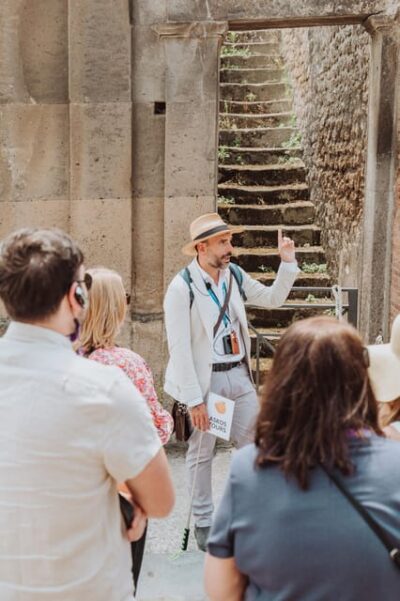
This tour is frequently praised for guides who bring Pompeii to life with passion and clear explanations. Names that show up in standout experiences include Luca, Gianluca, Roberta, Patrizia, Manuela, Roberta again, Clare, and Enzo. Across those different guides, the common theme is that the tour feels lively, with explanations that hold attention and make the city make sense fast.
There are also a couple of cautionary notes from less positive experiences. One review complained the tour focused mostly on basic facts, and another described a poor kids experience involving mocking. Those aren’t universal patterns, but they do underline an important travel truth: your personal experience can shift with the guide’s style.
If you care about a very specific type of archaeology focus, send a note or ask a direct question at the meeting point. You can’t control everything, but you can reduce the chance of mismatched expectations.
Family-friendly Pompeii, with a smart reality check
This tour is listed as family-friendly. That aligns with multiple positive experiences involving kids around elementary school ages and early teens, with guides praised for patience, engagement, and keeping children on track.
In my view, this matters because Pompeii is a long attention game. Even a highlight tour can feel demanding for young kids, especially in hot weather and crowds. A good guide can adjust pace, stop in shade, and keep kids connected to what they’re seeing.
That said, one lower-rated experience in the mix described mocking and poor engagement, which is not something you should shrug off if you’re traveling with children. If your kids need hands-on curiosity or constant interaction, consider planning a short follow-up self-guided walk with extra breaks, so the day stays positive.
Bottom line: treat this as a family-friendly route, but keep your expectations flexible and communicate early if you want the explanations adapted for younger attention spans.
Heat, shade, and timing: how to have a better day in Pompeii
Pompeii can be hot. That’s not a romantic postcard fact, it’s a practical planning issue. Several guides received praise for adapting when it got hot, including stopping in shaded areas to explain while keeping groups comfortable.
Use this as your checklist when you book. Choose the morning if you can. Bring water and sun protection. And most importantly, follow your guide’s cues about where to pause. If you try to sprint through the whole site, you’ll miss the point and you’ll feel miserable.
The two-hour format also helps. You still see a lot, but you’re not locked into a long endurance test under the sun.
Price, tickets included, and whether it’s good value for you
The price is listed at $32.67 per person for about two hours in English, with mobile ticket delivery.
Here’s the value equation I think makes this tour make sense: you’re paying for someone to (1) shepherd you through a tight itinerary, and (2) explain what you’re looking at at the exact moments it matters. You’re also getting admission tickets included for every highlighted stop in the route.
If you’re the type who will wander Pompeii quickly with a map, you might eventually cover similar areas on your own. But the big difference is interpretation and pacing. For a first-time visit, the guide’s role can cut down the time you spend trying to figure out what a building was, where it fit, and why it matters.
If you already know Pompeii well and you mostly want to explore at your own pace, you might not get as much value. And if you’re picky about hearing every detail, be aware that headset experiences have come up in a less positive note, including trouble hearing on the equipment when the group size changed.
So, the best fit is clear: you want highlights, you want clarity, and you want the day to feel organized.
Upgrade options for more personal attention
The tour highlights include an upgrade for a private tour. If your group is small, if you have mobility needs within the moderate range, or if you want the guide to focus on what interests you most, a private option can be worth considering.
Private tours are also a useful move if your kids need more frequent pauses or if you want to ask questions without waiting for the group to catch up.
Should you book this Pompeii 2-hour small-group tour?
Book it if you want a strong first visit, a clear sense of what to see, and an itinerary that covers key Pompeii highlights without turning into an all-day slog. The included tickets and short time window make it a practical value, especially when Pompeii heat is part of your planning.
Skip it, or at least reconsider, if your priority is very deep, specialized archaeology detail or if your kids need a highly interactive approach every minute. Also keep in mind that while it’s capped at 30 and many experiences describe smooth guidance, group logistics can shift how the tour feels in the moment.
If your plan is simple, get in, see the big pieces, and leave with understanding, this tour is one of the more efficient ways to do it.
FAQ
How long is the Pompeii 2-hour small-group tour?
It runs for about 2 hours.
Is the tour offered in English?
Yes, it is offered in English.
What does the price include?
Admission tickets are included for the stops listed in the tour route.
Where does the tour start and end?
The tour starts at Ristorante Suisse, Piazza Esedra, 10/13, 80045 Pompei NA, Italy, and it ends back at the same meeting point.
How big is the group?
The tour has a maximum of 30 travelers. It also has a minimum number of 6 people required for it to run.
Is this tour suitable for kids?
It is marketed as family-friendly, and some guides are described as accommodating for children. One experience in the provided information describes a negative situation for kids, so it helps to think about your children’s comfort and expectations.
Are there free days or free admission rules for Pompeii?
Yes. Pompeii entrance is free on the first Sunday of each month. Entrance is also free for people under 18, as long as they show a valid ID or passport on the day of the tour.
What is the cancellation policy?
You can cancel for a full refund up to 24 hours before the experience starts. If you cancel less than 24 hours before, the amount paid is not refunded.
More 2-Hour Experiences in Pompeii
More Tours in Pompeii

More Tour Reviews in Pompeii

Not for you? Here's more nearby things to do in Pompeii we have reviewed





Tour Reviews, compared.
 ★ 4.8Pompeii: Entry Ticket and Guided Tour with an ArchaeologistFrom $3519,459 reviews
 ★ 4.2Pompeii: Entry Ticket with Optional Audio GuideFrom $2612,360 reviews
 ★ 4.8Pompeii: Small Group Tour with an ArchaeologistFrom $4012,264 reviews
 ★ 4.3Pompeii Ruins & Mount Vesuvius Day TourFrom $12011,459 reviews
 ★ 4.6Sorrento, Positano and Amalfi Full-Day TourFrom $10710,988 reviews
 ★ 5.0Sorrento, Positano & Amalfi Coast – Small Group TourFrom $768,643 reviews
 ★ 4.6Catacombs of San Gennaro Entry Ticket & Guided TourFrom $157,941 reviews
★ 5.0Pompeii Small Group Tour with an ArchaeologistFrom $356,593 reviews
★ 4.6Catacombs of San Gennaro Entry Ticket & Guided TourFrom $157,941 reviews
★ 5.0Pompeii Small Group Tour with an ArchaeologistFrom $356,593 reviews
Browse the lists this tour appears in